For a first communion, the personalized gifts that truly last are those bearing a first name, a date, or a bond: an engraved piece of jewelry, a medal, or an object merging two names in an optical illusion. This type of gift stands the test of time, whereas a generic present fades within a few weeks. Here are the main categories of gifts, the thoughtful touches to place on the table for guests, and how certain objects go further by hiding their message until the very last glance.
What to offer for a first communion? Ideas that are truly meaningful
A cross around the neck. A first name engraved in metal. An object placed on the nightstand and never forgotten. This is what we generally offer for a first communion. Not for lack of imagination, but because certain gestures have traversed generations without losing an ounce of their significance.
The first communion is not just any ceremony. It holds a distinct place in a child’s spiritual journey: neither the baptism, received in the first months of life, nor the confirmation, which comes later to ratify an adult choice of faith. The communion is the moment when the child steps forward, consciously, toward something greater than themselves. This passage deserves a gift of equal stature.
So, concretely, what do we give? The main families of communion gifts are as follows:
- Jewelry: cross, engraved medal, bracelet, 18-karat or 9-karat gold identification bracelet, chain with a pendant. A gift of faith worn on the skin, often passed down from one generation to the next.
- Decorative objects: religious icon, keepsake frame, personalized candle. Presents that find their place in the child's room and stay there.
- Personalized souvenirs: an object engraved with a first name and a date, which anchors the moment in material and in memory.
- Communion guest gifts: small tokens offered to the loved ones present at the ceremony to thank those who made the trip.
Among these choices, one criterion stands out naturally: durability. A communion gift forgotten in three weeks is a failed gift. An object carrying a first name, a date, and a sentiment lasts for years. It survives moves, turbulent teenage years, and cluttered drawers.
For a girl, one often thinks of a fine necklace, a delicate bracelet, or an engraved medallion. For a boy, an identification bracelet remains a solid choice, as does a simple gold cross. But the communion gift for a girl or a boy that really leaves a mark is not necessarily the most expected one. It is the one that tells a story.
Tells what, exactly? A first name. A date. Two people linked by affection and by that day. In its most accomplished form, a symbolic gift does not just decorate a room: it says something to the child about themselves and those around them.
And that is where something changes, gently, in the way we think about communion souvenirs. The most durable objects are not always the heaviest. Sometimes, it is the lightness of a reflection or the surprise of a glance captured from a certain angle that creates the strongest emotion.
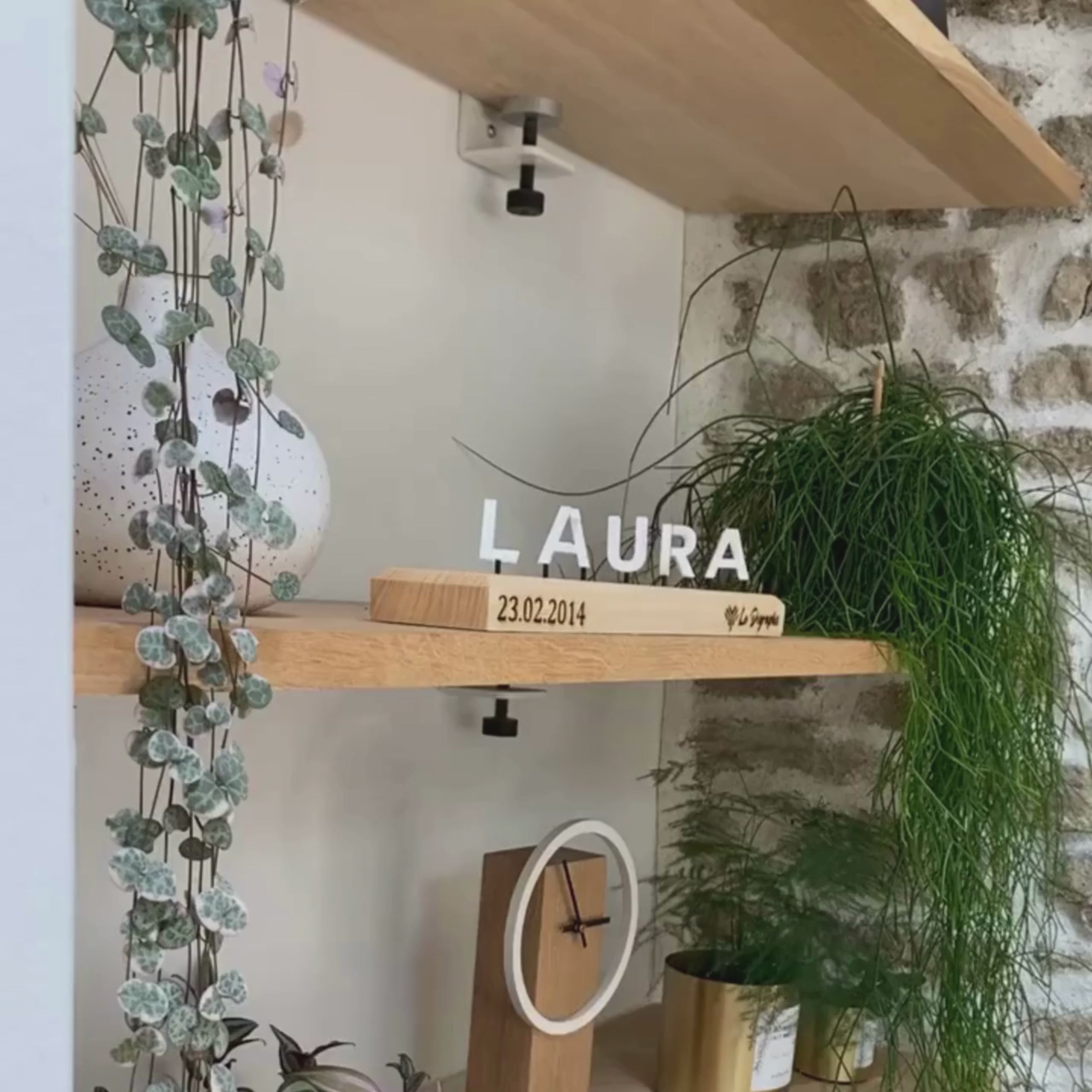
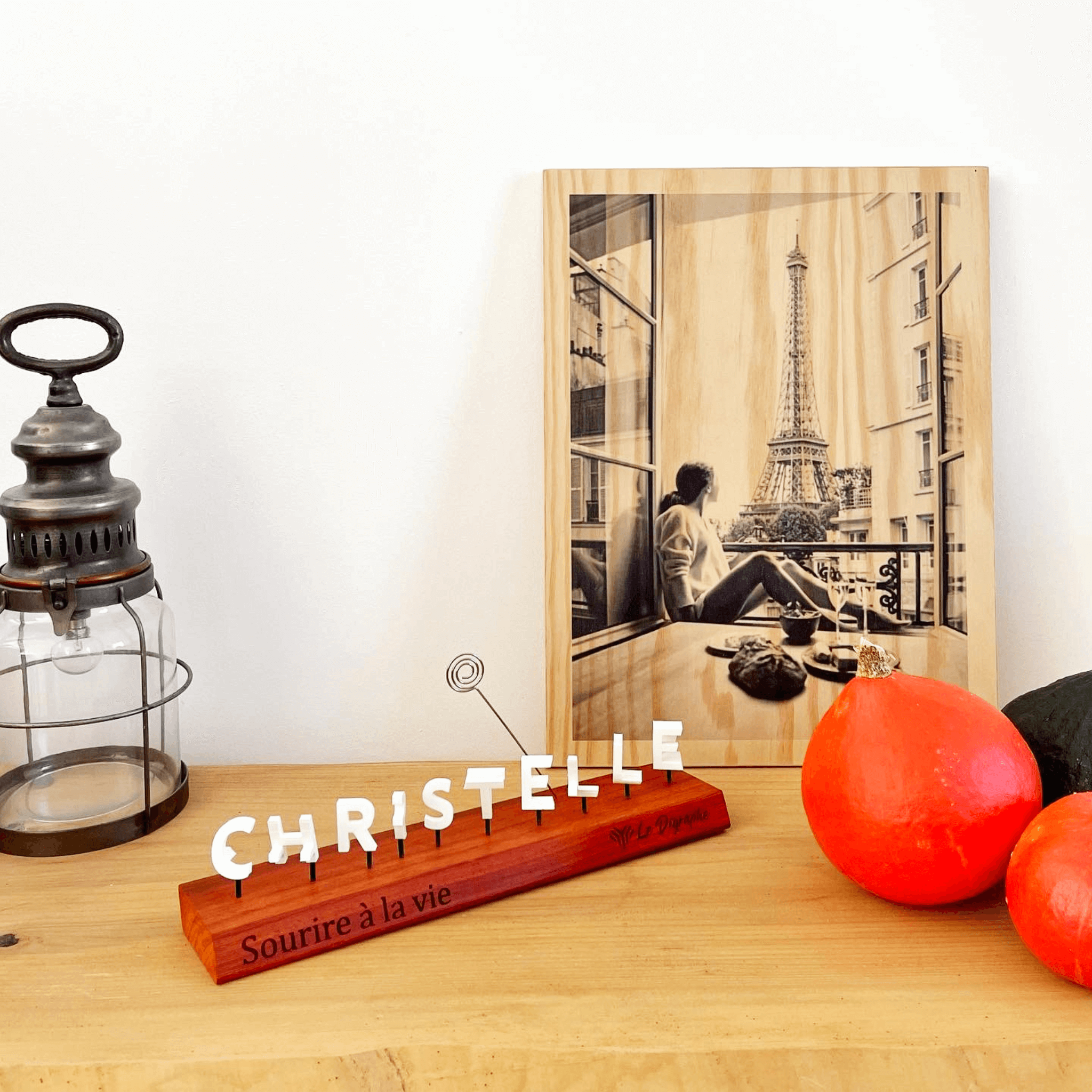
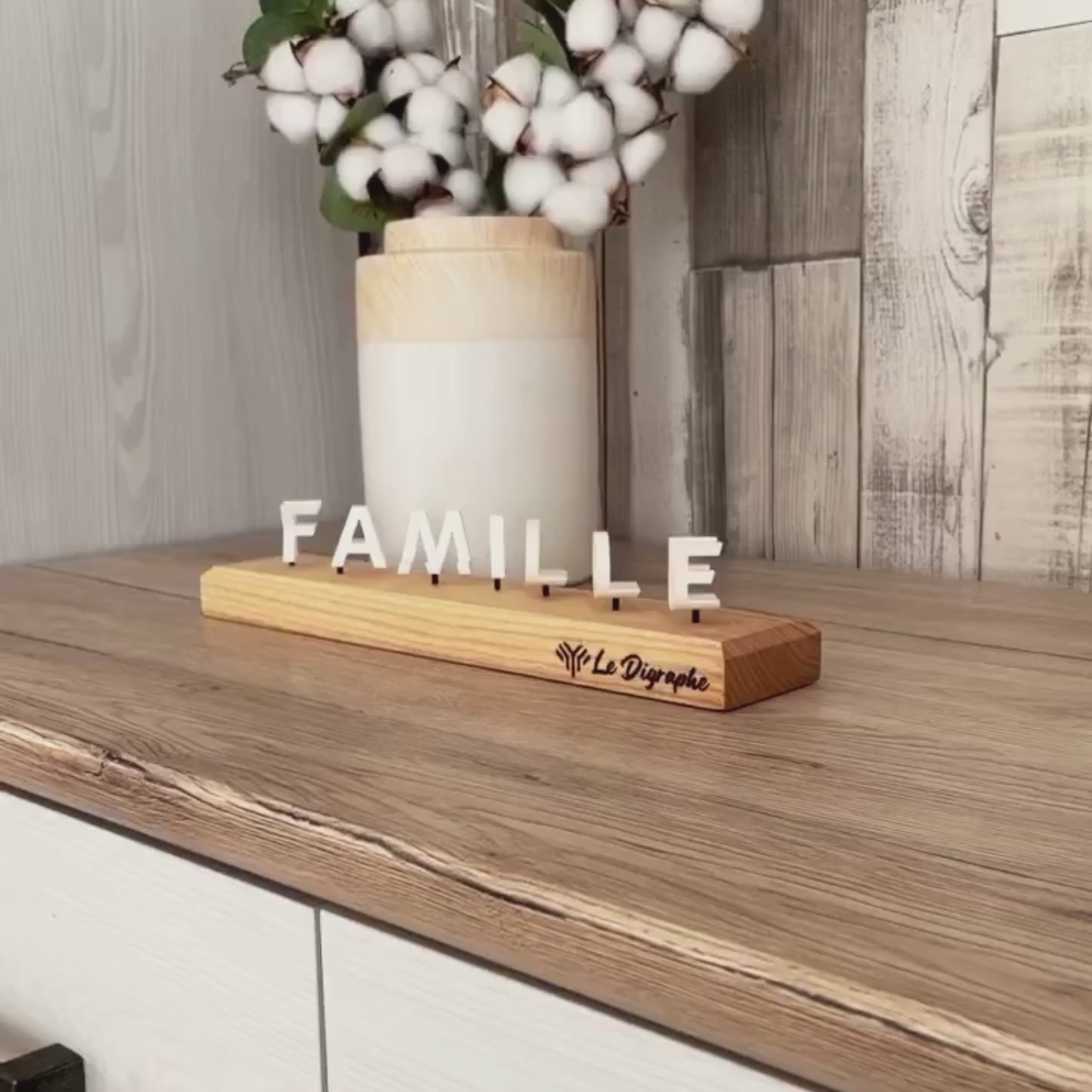
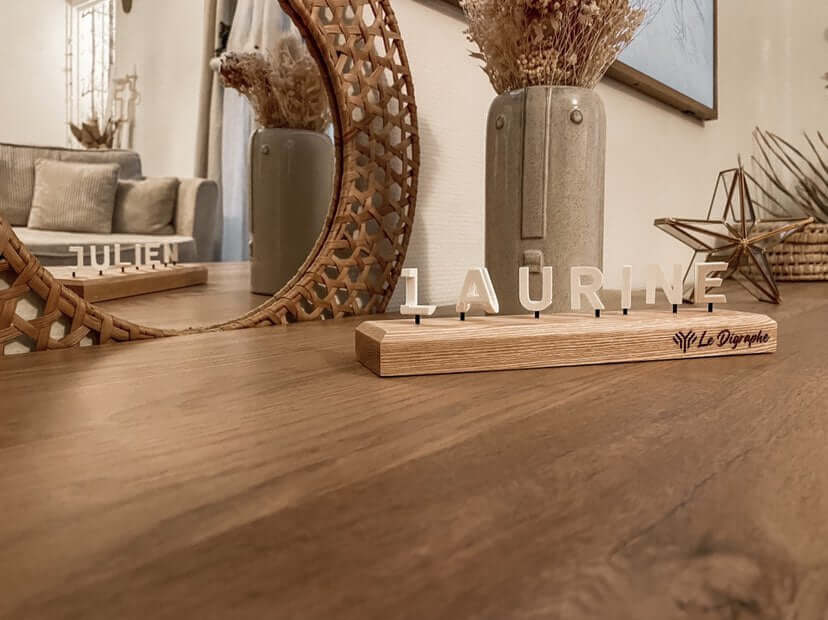
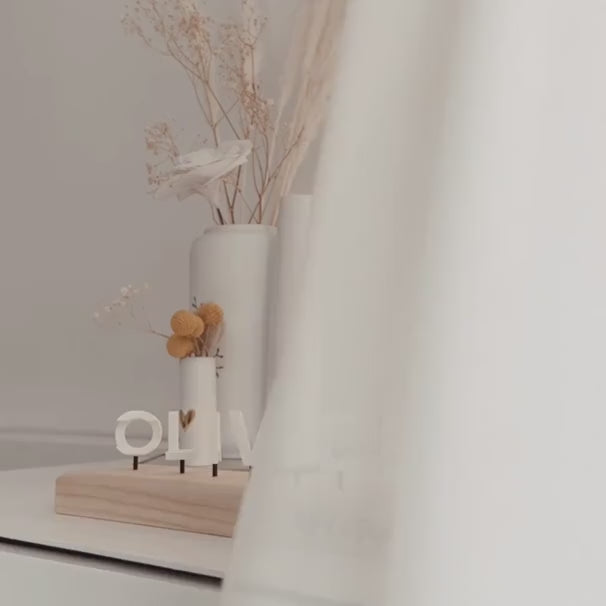
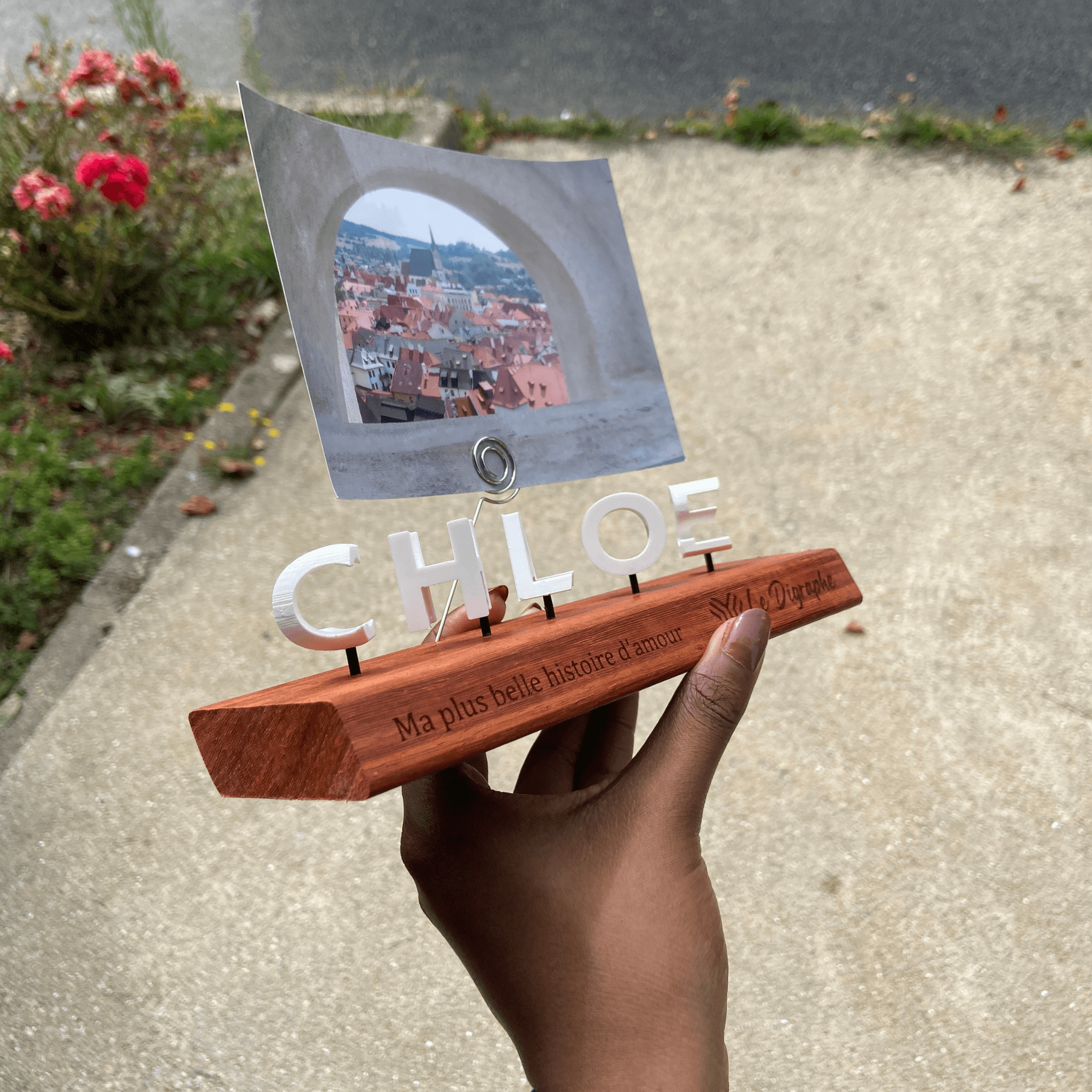
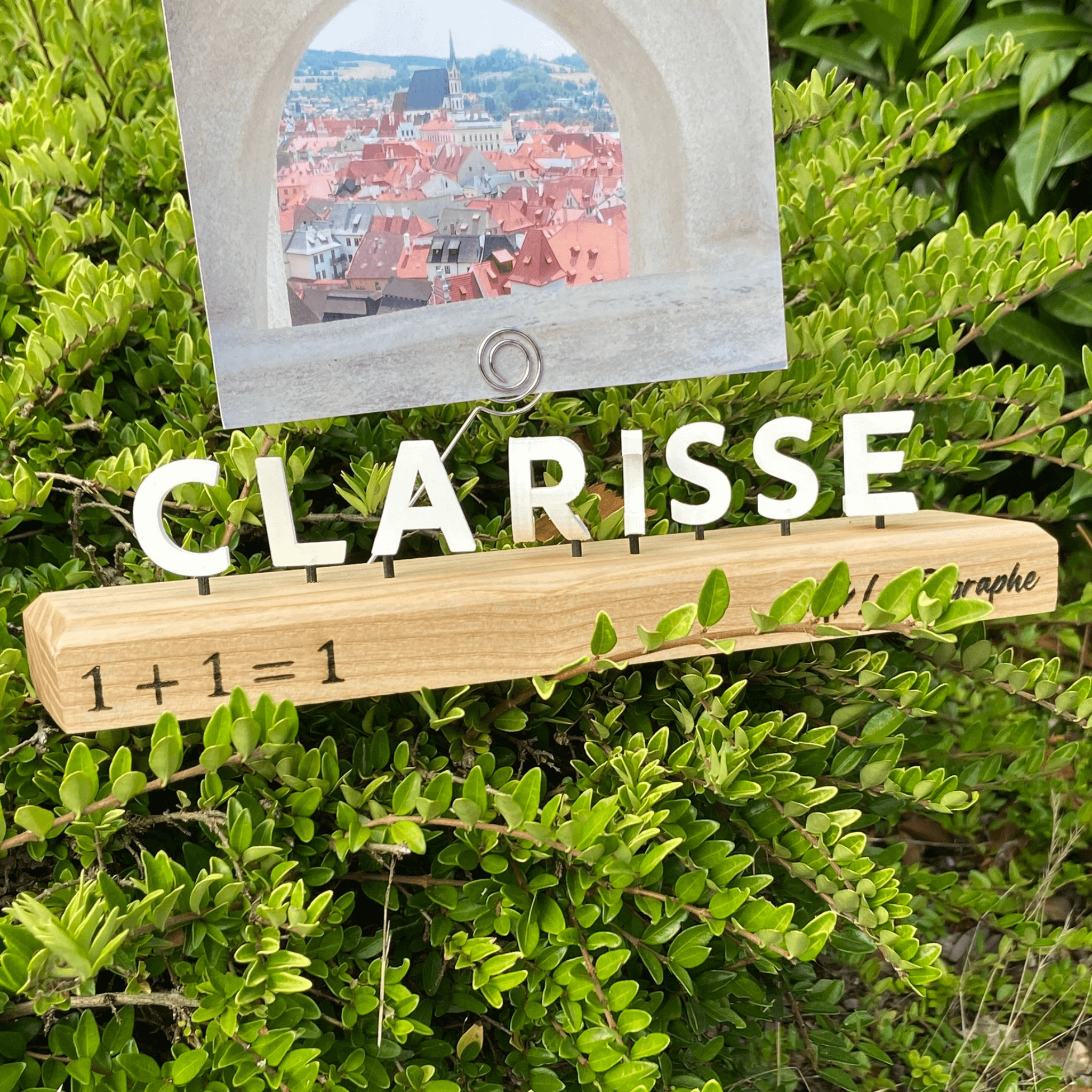
A form of original communion gift remains little known, halfway between a decorative object and a personal work of art. An object that bears two first names, but does not display them side by side. It merges them, blends them, weaves them into each other, to the point where the revelation only comes to those who take the time to look. An unforgettable souvenir, literally invisible at the first second. And moving the next.
Communion guest gifts: small items, big memories
Two distinct moments define the logic of communion gifts. First, the object given to the child: a cross, a piece of jewelry, something that marks their passage. And then the communion guest gifts, those tokens placed on each plate or offered at the exit of the church for the loved ones who made the trip. Two gestures, two intentions, one single ceremony.
Why do families take such care with these? Because this small object placed in front of each guest recounts the celebration just as well as the priest's sermon. It says thank you. It says: you were there, and it mattered. The communion souvenir, in its simplest form, turns a table into a collective memory.
The most common forms are well-known: communion sugared almonds in their containers, communion magnets slipped into a pouch, personalized candles, artisanal soaps, or honey jars. These objects form the expected decor of a successful communion table setting. Some sugared almond containers hold between 8 and 15 pieces. It is small. But a well-thought-out communion thank-you gift doesn't need to be big to remain in memory for a long time.
The personalized guest gift takes a step further. Rather than a generic object with a thematic sticker, it bears the child's name, the exact date of the ceremony, and sometimes a sentence. This detail changes everything. The communion magnet on a great-aunt's refrigerator is no longer a vague memory of a spring party: it is May 14th, it is Léa, it is that day and no other.
Personalized communion guest gifts meet three simultaneous expectations:
- to anchor the ceremony in the guests' memories through a concrete, dated object;
- to create visual coherence between the table decor and the souvenir taken home;
- to express sincere gratitude, without the coldness of a standard gift.
Among the selection criteria, "Made in France" artisanal craftsmanship is on the rise. Families are looking for a handmade gift, produced locally, with a transparent production chain. A souvenir object carefully crafted in France carries extra value: that of the touch, the time spent, and the hand that assembled each piece. The mini-soap in a cork case, for example, combines soap making, cork shaping, engraving, and hand assembly, entirely carried out in France. For many families, this level of detail has become as decisive a criterion as aesthetics.
The original guest gift goes even further than personalization with a date and name. It weaves in an intention. A candle whose scent evokes church wax. A magnet whose illustration uses a symbol chosen by the child. A soap whose shape says something about the faith or the tenderness of the moment. The object ceases to be a thank-you and becomes a fragment of that day's story.
So, ultimately, what does a guest really keep from a communion party? Rarely the menu, often the warmth, and almost always that little object found months later in a drawer, which suddenly brings back the child's name, the light in the church, and the sound of chairs being pushed back.
Personalized communion candles burn out. Sugared almonds are eaten. The right object, the one that carries a date and a name engraved with intention, lasts long after the party.
How to personalize a communion gift: first name, date, intention
A personalized communion object starts with a decision: the choice to refuse the generic. Not the medallion pulled from a bulk lot. Not the almond box with a hastily stuck-on label. A true personalized souvenir is built with three simple ingredients, yet so often overlooked.
The first name and the date: the foundation that changes everything
The child's first name alone is not enough. It is the combination of first name and date that transforms an ordinary object into a life landmark. The date of the ceremony anchors the memory in reality: ten years from now, the child turned adult will know exactly what they are holding in their hands. No need to ask their parents.
Adding the name of the person giving the gift further changes how the object is read. A godparent's first communion gift bearing both names, that of the child and that of the godparent, becomes a conversation frozen in material. A visible bond. A proof of love that does not fade.
Surface personalization vs. deep personalization
Two levels exist, unequivocally.
- Surface personalization: a sticker, an adhesive label, text printed on paper slipped into a bag. It exists. It is forgotten as quickly as it fades.
- Deep personalization: laser engraving cut into the material, a fusion of names thought out at the design stage of the object, a shape that would not exist without the details of this specific communion, this day, for this child.
Laser name engraving, for example, penetrates the material. It does not peel off. It does not fade with washing. A personalized 18-karat gold engraved piece of jewelry preserves the inscription as long as the jewelry itself, and 18-karat gold is 75% pure gold, which guarantees resistance over several decades. Not a trivial detail when talking about a durable gift.
Girl, boy: different sensitivities, not boxes
A communion souvenir for a girl often takes the form of fine jewelry: necklace, bracelet, earrings. The object is worn, shown off, accompanied by a story to tell. For a boy's communion gift, one thinks more of a striking decorative object, a sculpture, a display piece, something that takes up space in a room rather than on the wrist.
But the boundary is not where we think. What matters is the personalization, not the gender. An object designed around the child's name, whoever they are, hits the mark. A handmade gift thought out for them, and not for a "typical child" out of a catalog, is felt immediately.
Thinking ten years ahead
A personalized communion object must withstand time. Not just survive the day. The question to ask before buying: will this child, at 20, still want to show this object? If you hesitate, it means the personalization is not deep enough or the material will not go the distance.
A handmade gift, designed with custom engraving or a bespoke fusion of names, passes this test. A communion sticker on a generic bottle does not. The durability of a personalized object begins with the choice of technique and is still evident years later, when the object comes out of a drawer and tells, without a word, what it was like on that day.
Choosing an original communion gift: criteria that make the difference
Before buying, ask yourself one question: will this object still be here in five years? Not in a forgotten drawer, not at the bottom of a box. Truly here, placed on a shelf, looked at, shown off. If you hesitate, the object has not yet proven itself as a truly unforgettable souvenir.
This is the first criterion of an original communion gift, and the most honest one. A durable gift is not durable because it is solid. It lasts because it has something to say, over and over, to the child who grows up in front of it. A magnet fades; generic jewelry is forgotten; an object carrying a name, a date, and an intention engraved in the material holds the test of time.
Second criterion: real uniqueness. Was the object thought out for this specific child, or could it have been slipped into any white organza bag that day? The question is sharp. A symbolic gift is not symbolic because it represents a cross or a dove. It is because it encodes a specific relationship between the giver and the receiver. Giving is about weaving a concrete social bond, not just handing over a stock item. Anthropology puts it bluntly: what circulates in a gift is a part of the person who chose it.
Third criterion: care in manufacturing. A handmade gift, designed in a French workshop, carries a quality of attention that mass production cannot reach. French artisanal manufacturing guarantees a human trace in every finish, every cut, every laser engraving. This is not a marketing claim. It is the difference between a poetic object and a product.
Fourth criterion, often neglected: meaning beyond the moment. A gift of faith should not go out on the evening of the ceremony. The child who has communed will grow up, question, and build their own story. The personalized decorative object that stays in their room travels through those years with them. It imposes nothing; it reminds them of something.
A simple mental grid, in four steps:
- Will the object still be present in the child's room in five years?
- Does it carry meaning specific to this child, or could it be offered to anyone?
- Was it made with care, the opposite of an anonymous series?
- Does it extend the relationship between the child and the person who chose it?
When all four answers are yes, it is a unique gift. When even one falters, it is a souvenir of circumstance.
It is exactly in this space that the digraphe finds its place. Not just as one more original communion gift on a list. As a communion gift idea that merges two names into a single luminous sculpture: one visible from one angle, another that emerges when you turn the object in the light. The surprise is complete, the personalization absolute, the manufacturing is French and artisanal, and the social bond it ties between the child and their loved one is inscribed in the very material itself.
It is not just another religious object. It is a living object, to be discovered slowly, which tells a story written for a specific person, on a specific day. The digraphe awaits your gaze.
FAQ
What do we offer for a first communion?
We generally offer religious jewelry—a cross, medal, bracelet, or identification bracelet—but also decorative objects such as a keepsake frame or a personalized candle. The guiding thread remains the same: a gift that lasts, that carries meaning, and that fixes this day in the child's memory long after the ceremony.
What is the ideal gift for a first communion?
The best gift is one that tells the child something about themselves and those who gave it to them. An object engraved with a name, a date, and a bond is what survives the years. Neither too big nor too neutral: just personal enough to never be forgotten in a drawer.
How much money should be given for a communion?
There is no fixed amount. It all depends on the relationship with the child and family customs. What matters more than the price is the symbolic value of the gesture. A personalized gift on a modest budget can be much more meaningful than a generous but impersonal envelope.
What are the symbols of the first communion?
The cross, the host, light, and white are the main symbols of the first communion. The cross worn around the neck remains one of the most transmitted gestures from generation to generation. Engraved with a name or date, it becomes both a symbol of faith and a personal souvenir of the day the child took that step.
A personalized communion gift that is remembered long after the ceremony
A name engraved, two names melted into one another, a date fixed in the material: a personalized communion gift is not just a table souvenir. It is an object that still speaks when the white dress is sleeping in a box and the photos have yellowed. What the child takes away that day is also a gaze directed at them, a kindness sculpted in something solid. And if, tomorrow, the forms change, if light travels through new materials, and if workshops invent new ways of blending two names into a single reflection, that gesture itself will remain the same: telling someone they matter, and engraving it somewhere so that it lasts.