For a personalized christening guest gift that truly lasts, opt for an object engraved with the child's name and the date of the ceremony: laser-engraved cork-cased soap, wooden bookmarks, or even a miniature digraph where two names merge into a single shape. These formats combine noble materials, French craftsmanship, and lasting personalization—three criteria that make the difference between a keepsake kept for years and a candy box forgotten by the next day.
This article reviews each selection criterion, engraving techniques, ideas suitable for both girls and boys, and how personalization transforms a simple object into a fragment of a unique day.
What to offer christening guests: the criteria for a beautiful keepsake gift
A small object placed on each plate, a token slipped into a hand as guests say goodbye. This gesture says something strong: thank you for being there. And yet, how many christening guest gifts end up in the back of a drawer by the following Monday? The question is worth serious consideration.
A christening guest gift is a memento given by parents to guests to thank them for sharing the ceremony. Whether a religious christening or a civil naming ceremony, for a girl or a boy: the tradition remains the same. Loved ones leave with a small personalized christening gift in their hands, and with it, a fragment of the moment.
So, what makes the difference between a christening keepsake that lasts and one that disappears? Four criteria, no more.
- Originality: an original christening gift surprises and creates a moment. It departs from the predictable without trying to show off.
- Personalization: an engraved name, a date, a detail that anchors the object in a specific story. Without this, the keepsake remains generic.
- Durability: a lasting christening gift withstands the test of time. It stays on a shelf or a desk long after the buffet flowers have wilted.
- Symbolic value: a symbolic christening gift carries meaning beyond its material. It tells of a bond, a moment, a promise.
Sugared almonds? Eaten in two minutes. A bag of sweets? Forgotten before the end of the week. What remains are objects that withstand daily life because they tell a story. A guest will keep an item that has meaning for a long time. Never one that lacks it.
The poetry of thanking christening guests lies in this: leaving a trace. Not a logo, not advertising disguised as a candy box. A trace of the day's emotion, housed in material, visible every time the eyes rest upon it.
A christening, whether civil or religious, is a ceremony of bonds. Between the child and their loved ones, between the parents and their community, between a name and the world that welcomes it. The guest gift is the silent messenger of all this. It travels in pockets, settles into homes, and continues to exist long after the chairs have been returned.
Choosing a beautiful and thoughtful object for your guests is about extending the emotion of the ceremony into their daily lives. It is a decision to leave something behind. No sugared almond can do that alone.
There is no shortage of christening gift ideas, but not all keep this promise. Personalization, however, changes everything. This is what the next chapter examines closely.
The personalized christening guest gift: why personalization changes everything
An ordinary object placed on a party table remains just an object. Engrave a name on it, write a date, and everything changes. Suddenly, this object belongs to one specific day, one specific story. This is exactly what christening personalization achieves: it transforms a generic souvenir into a silent witness of a moment lived together.
The child's name, combined with the christening date, anchors the object in a specific reality. Each guest leaves with something unique that no one else possesses. No duplicates, nothing interchangeable. One child, one day, one object.
Forms of personalization vary according to the mood and style of the ceremony:
- the child's name, alone or accompanied by the christening date
- a short message, a quote, or a sweet word tucked onto the support
- a motif adapted to the chosen theme, floral for a girl's christening, geometric or nature-inspired for a boy's
- a palette of colors and materials that match the table decoration
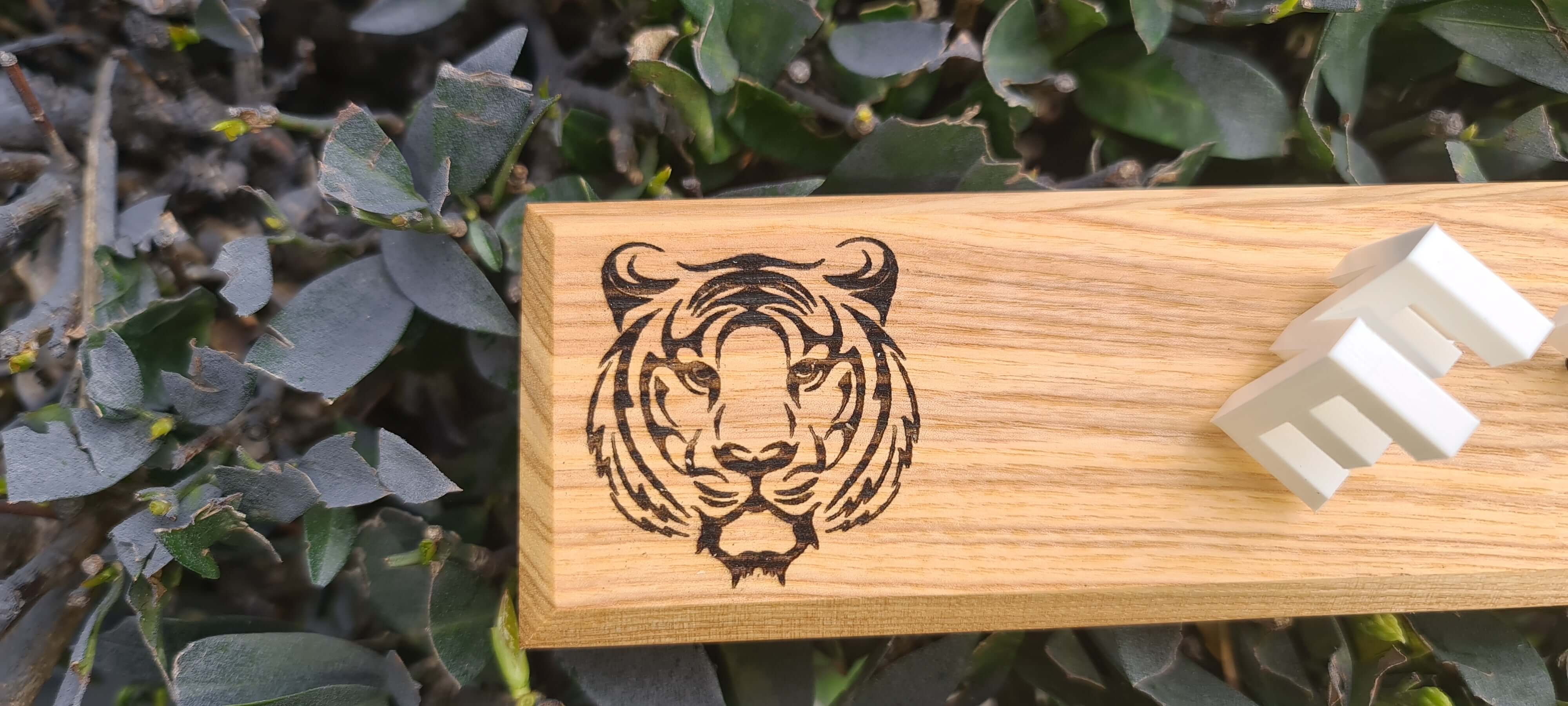
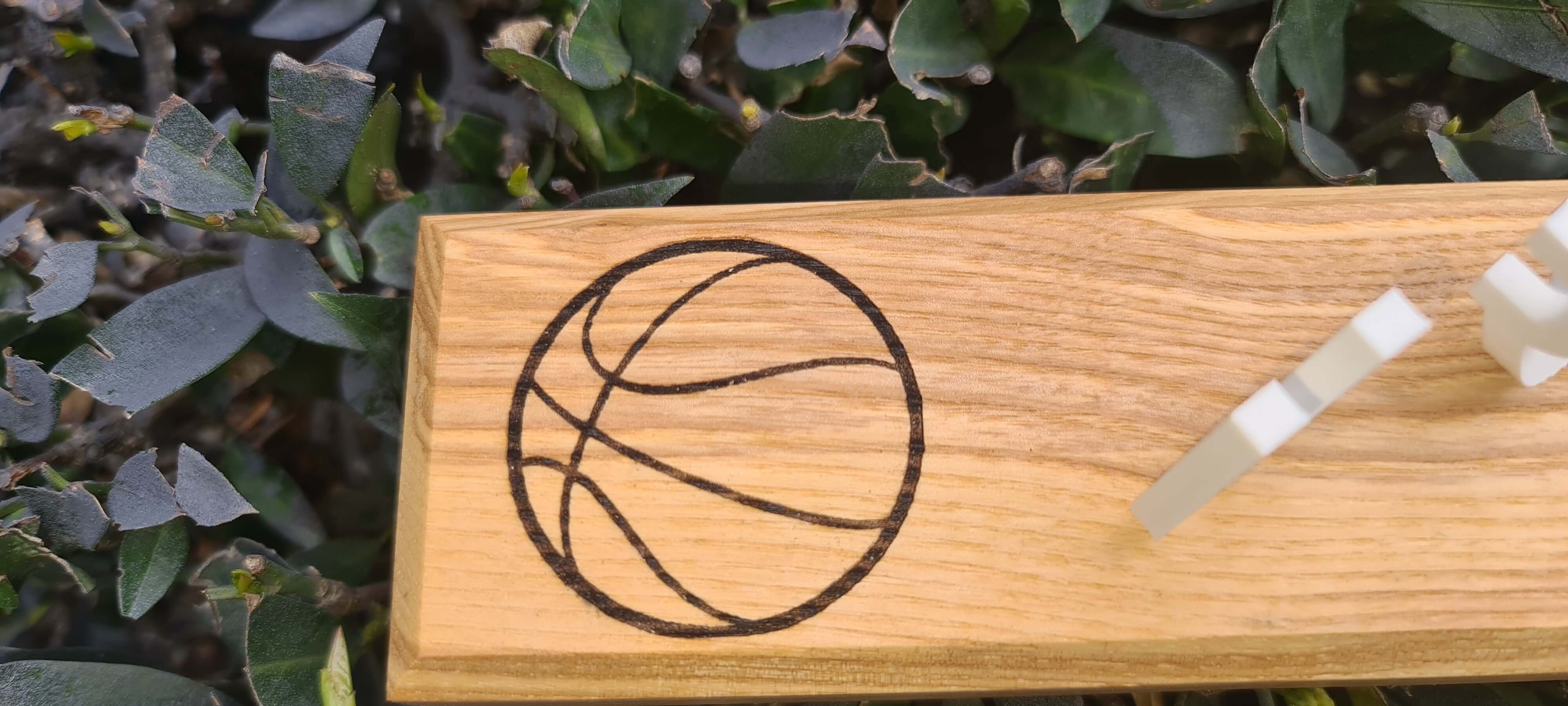
Laser name engraving is now the gold standard for personalized christening items. It carves a clean, lasting groove into the material, whether wood or cork. No ink to fade, no stickers to peel off. The mini cork-case soap, for example, is entirely made in France: cork engraving, soap shaping, and hand assembly. Every step is carefully executed.
And what if personalization went further than just the name?
This is where a rarer, more poetic idea arises: merging two names into a single personalized decorative object, such that each only appears from certain viewing angles. The digraph relies on this principle of optical illusion. Two names coexist in the same form. One appears when you hold the object from one side, the other waits, nestled in the same material. A secret that the guest discovers at home, once the party is over.
This is a difference in nature, not degree. A sugared almond container personalized with an engraved name says: "you were there that day." A digraph says something more: it tells the story of the bond between two beings, visible depending on the angle from which one views it. The child's name personalization thus becomes a symbol, and the symbol lasts well beyond the ceremony.
For both girl and boy christenings, the challenge is identical: ensuring this object survives being put in a drawer. That it is rediscovered years later and reminds one, effortlessly, of the light of that day. Laser engraving ensures this durability. The merging of names ensures the wonder.
The digraph: a unique christening keepsake object between illusion and emotion
Imagine placing an object on the table. Your guests look at it from the front: a name appears. They tilt their heads slightly, change their angle, and suddenly, a second name arises, as if it had always been there, hidden in the material. That is exactly what a digraph is.
This engraved gift object relies on a principle as simple as it is disconcerting: two names merged into a single volume, each readable depending on the viewing angle. The godchild's name on one side, that of their godfather, godmother, or one of their parents on the other. A fusion of names that is not just a visual effect, but a strong symbolic gesture.
The experience of someone receiving a personalized digraph almost always follows the same path. First, curiosity: this transparent or wooden object, with its unusual contours, catches the eye. Then surprise: one name is clearly legible. And then wonder, that precise moment when one pivots the object and the other name appears, as if revealed. It is not a gadget. It is a little revelation.
As for the material, the digraph exists in worked glass or wood, depending on the chosen model. Light passes through or brushes the surface, depending on the material, revealing reflections, cast shadows, and a texture that invites the touch. Laser engraving carves the name into the material with millimeter precision. This artisanal process, carried out in France, ensures a neat finish.
What distinguishes a digraph from other christening keepsakes is what it encodes: the bond. Each guest leaves with an object bearing their own name and that of the godchild. It is no longer a generic souvenir of the ceremony; it is a personal declaration. A poetic christening gift, in the literal sense, which tells each loved one: this day belongs to you too.
- French artisanal manufacturing guarantees the quality and uniqueness of each piece.
- Laser engraving etches the names into the material with lasting sharpness.
- The name optical illusion works regardless of the name, no matter how short or complex.
- Each digraph is produced to order, never mass-produced.
Unlike a sugared almond forgotten at the bottom of a bag, the digraph finds its place in a living room, on a bookshelf, in front of a window where light plays with its angles. It stays there. Every time a glance falls upon it and the second name arises, the ceremony returns, intact.
A unique christening gift is not chosen solely for its aesthetics. It is chosen for what it continues to tell, long after the flowers have wilted.
How to choose and order your christening guest gift: practical advice
Before even choosing the object, a question must be asked: who is it really for? A christening brings together very different generations: grandparents, teenage cousins, close friends, colleagues. The guest gift must bridge these gaps without forcing it. This is often where overly anecdotal solutions fail.
Adapting the gift to the theme and the guests
For a christening guest gift idea for a girl, families often lean toward soft tones, scented soaps, or natural wax candles. For a boy, raw materials like wood or cork tend to dominate. But the real question is not the color: it is the emotional durability of the object. A personalized christening candle disappears after a few hours of burning. A digraph, however, remains on a shelf years after the ceremony.
Personalized christening table decoration often follows a graphic, rustic, celestial, or watercolor theme. The guest gift benefits from matching this without getting lost in it. An object that is too generic blends into the background. An object that is too cluttered clashes. The digraph, sober and geometric, adapts to almost any visual universe.
Budget, quantities, and lead times: what to anticipate
The budget question is concrete. Between a christening candle guest gift at under five euros and an artisanal christening keepsake with unique personalization, the price difference corresponds to a difference in meaning. Families who choose an original christening guest gift often do so for a select circle of close guests, while sugared almonds and small soaps round out the rest of the table.
- Allow 2 to 7 business days between ordering and receiving a personalized gift (production: 1 to 3 days; delivery: 1 to 4 days depending on the carrier).
- Place your order at least three weeks before the ceremony to accommodate any unforeseen events.
- For large tables, a hybrid format works: a unique ceremony keepsake for close family, a sugared almond container for other guests.
- Check if accessories (ribbons, labels) are included or offered as options; they are not always.
What is an original gift to give for a christening? Not necessarily the most expensive or the most elaborate. Originality lies in real personalization: an engraved name, an inscribed date, a shape that tells a story. DIY christening guest gifts appeal to creative families but require time, which should be anticipated from the first weeks of preparation.
The role of the godfather and godmother
The godfather and godmother hold a special place in the ceremony. Their gift naturally stands out from that of other guests. Some choose to pair it with a digraph as a complement to their main present: the object then embodies the special bond that unites them with the child, visible in the fusion of the two names. Others give it together, as a common and symbolic gesture. In either case, the digraph works precisely because it looks like nothing else on the ceremony table—neither a candle, nor a sugared almond, nor a DIY christening guest gift.
Anticipating also means giving yourself time to choose correctly.
The object that remains: when a christening guest gift becomes a lifelong souvenir
Some gifts bring pleasure on the day itself, then disappear into a drawer. Others last through the years. The difference rarely lies in the price: it lies in what the object tells, in how it carries a trace of what was experienced.
A durable christening gift always has something to say. A name engraved in the material. A date that emerges when the light shifts angle. An artisanal touch that one can feel under their fingertips. Those details do not age: they deepen over time, like a story one reads differently each season.
This is exactly what the digraph offers. Two names merged into a single object, visible one after the other depending on the angle of view: an optical illusion that never exhausts itself. The first time a guest holds a digraph in their hands, they explore. They tilt it, they turn it, they smile. Then they do it again. That moment, that quiet little surprise, is what makes people place the object on a shelf rather than in a forgotten box.
Artisanal manufacturing in France is not just a sales point. It is a tangible reality: each digraph is born from precise work, designed so that two names coexist without clashing, in a form where geometry becomes poetry. That care can be read, even without knowing it. It is perceived in the balance of the object, in the sharpness of the engraving, in the fact that it works, always, even with the most unlikely names.
For a girl's or boy's christening, the digraph naturally merges the two names that define this day: that of the child and that of the godfather, godmother, or a loved one. A unique ceremony keepsake that doesn't just say "I was there" but "we were bonded, on that day."
This is where the Digraphe philosophy touches on something deeper than decoration. A personalized decorative object remains a beautiful thing. An object that carries two names and plays with light depending on the angle of view becomes a symbol. It embodies the bond without needing to explain it.
Sugared almonds are eaten. Soaps melt. The candle goes out. The digraph, however, remains on the shelf, between a book and a photo. Someone picks it up one evening, years later, and remembers.
So, if you are looking to thank your guests with something that lasts beyond the ceremony, here is a question to ask yourself: which object, among all those you could place on a christening table, would still tell a story in ten years? The digraph already has its answer engraved inside.
FAQ
What gift to give to christening guests?
Parents give guests a small keepsake object to thank them for sharing the ceremony. Sugared almonds, keychains, tealights... but what truly remains in hands and memories is a personalized object, engraved with a name or a date. A detail is enough to transform a polite gesture into a lasting souvenir.
What is an original christening guest gift?
Original does not mean extravagant. It means unexpected, thoughtful, anchored in the day. A personalized digraph, where two names merge in an optical illusion, creates a visual surprise that the guest sees nowhere else. It is this gap between the simplicity of the object and the depth of the symbol that makes an impact.
What is given during a christening?
Two traditions coexist: guests bring a gift for the child, and parents give a souvenir to the guests. This memento often takes the form of a small decorative or edible object. The trend today is toward personalized, engraved, crafted pieces made in France, rather than classic confectionery.
How to choose the right christening guest gift?
Four questions to ask yourself: is it original? is it personalized? will it last? does it say something? An object that checks all four remains on a shelf long after the party. An object that checks none ends up in the back of a drawer by the following Monday. Personalization is often the deciding factor.
Can you personalize a christening guest gift with the child's name?
Yes, and that is actually what makes the object inseparable from the day. Engraving the name of the godchild or the baptized child anchors the souvenir in a specific story. At Digraphe, personalization goes further: two names merge in a single object, visible depending on the viewing angle, a symbol that tells of the bond as much as the name.
A personalized christening guest gift is a trace, not a gadget
A first name engraved in wood, a date inscribed in cork, two first names that seek and find each other in a digraph. A personalized baptism favor doesn't get lost in a drawer because it tells something true: a child, a day, people gathered around them. It is this symbolic weight that gives it longevity, far beyond the material itself. And if the question now arises as to how far to go with personalization, the answer is simple: as far as the story deserves.