A personalized Christmas gift is an object made for a specific person: an engraved first name, an inscribed date, a story encoded in the material. That is why you keep it for years, while a generic gift ends up in a drawer. The digraphe takes this idea even further: two first names merged into a single sculpture, each visible from a different angle, laser-engraved in France in wood or crystal.
This article explains why personalization changes the very nature of a gift, how the digraphe's optical illusion works, and for which loved ones this type of object truly makes sense.
Why choose a personalized Christmas gift instead of a standard item?
Every December, the same gentle tension returns. We pace the aisles, scroll through pages, and hesitate. The desire to do well is there, sincere, but with it comes that little voice: what if it doesn't truly touch them? What if the gift under the tree disappears into a drawer on December 26th?
A personalized Christmas gift answers this question differently. Not because it is more expensive or more spectacular. Because it carries something that no standard item can: visible proof that you thought of the other person specifically, of them and no one else. An engraved first name, a date inscribed in the material, a story encoded in the form. The object then becomes a mirror of the bond that unites the giver and the recipient.
Anthropologists observed this long before the era of online stores. Marcel Mauss, a French sociologist and ethnologist, demonstrated that giving is never a neutral act: it engages, it connects, it says something about the relationship. To give is to make yourself present in the other person's life in a way that money alone cannot accomplish. A symbolic gift filled with intention goes beyond a simple transaction. It creates an emotional bond that time does not erase.
That is where the whole difference lies. Between a generic Christmas gift idea and a gift full of meaning, the gap is not a matter of budget: it is a matter of intention. One fulfills a social obligation. The other becomes an unforgettable memory. You don't keep an object because it was expensive. You keep it because it reminds you of a face, a voice, a shared moment.
An original Christmas gift is also this: breaking away from the predictable without falling into extravagance. Not necessarily a rare object or one imported from afar. An object made in France, crafted with care, designed for a specific person. Durable, standing the test of years without aging, because it carries a meaning that time cannot erode.
Choosing uniqueness where the market offers uniformity. Deciding that the person in front of you deserves better than an interchangeable emotional gift. It is a gesture of presence, nothing less.
What if some objects went even further? What if they didn't just write a first name, but merged two stories into a single form, visible depending on the angle from which you look? That is exactly what a truly unique object achieves, where material becomes language, and where the gaze itself participates in the gift.
The digraphe: the optical illusion that merges two first names into a single object
Imagine holding a silent object in your hands. You look at it from the front: a first name emerges, clear, legible, almost familiar. You tilt your head slightly, or rotate the piece a few degrees, and the other first name appears, as if it had been waiting for its time, hidden in the material. That is exactly what the digraphe produces.
This poetic gift is based on a visual principle that is as simple as it is astonishing: two first names engraved in a single volume, each legible from a different angle. No layering, no collage. A single sculpture, a single piece, two identities that coexist without ever contradicting each other. The optical illusion is not a sleight of hand: it is born from meticulous geometric work, designed so that light reveals one or the other first name depending on the direction of the gaze.
What if your story could fit in a single object, visible depending on the angle from which you look?
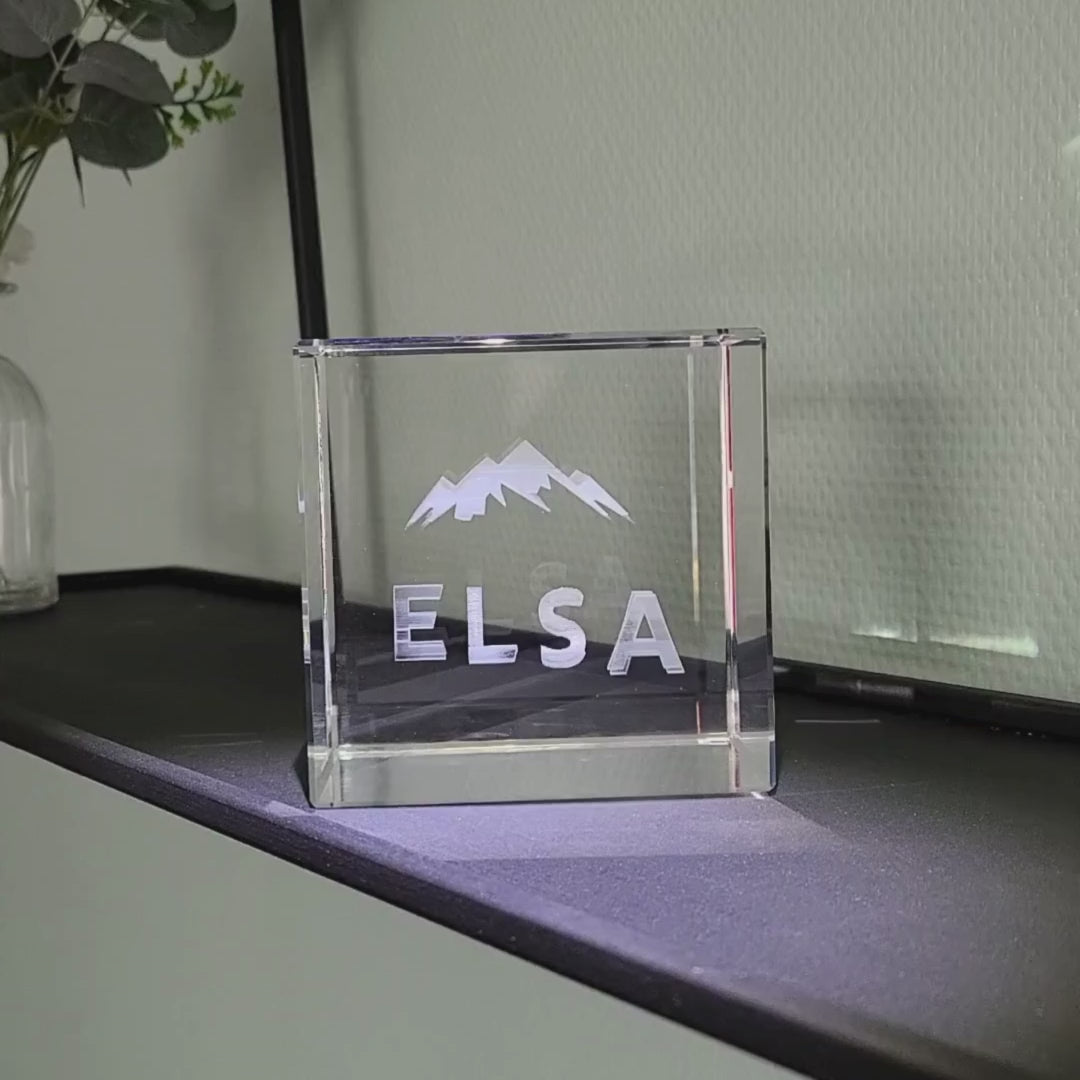
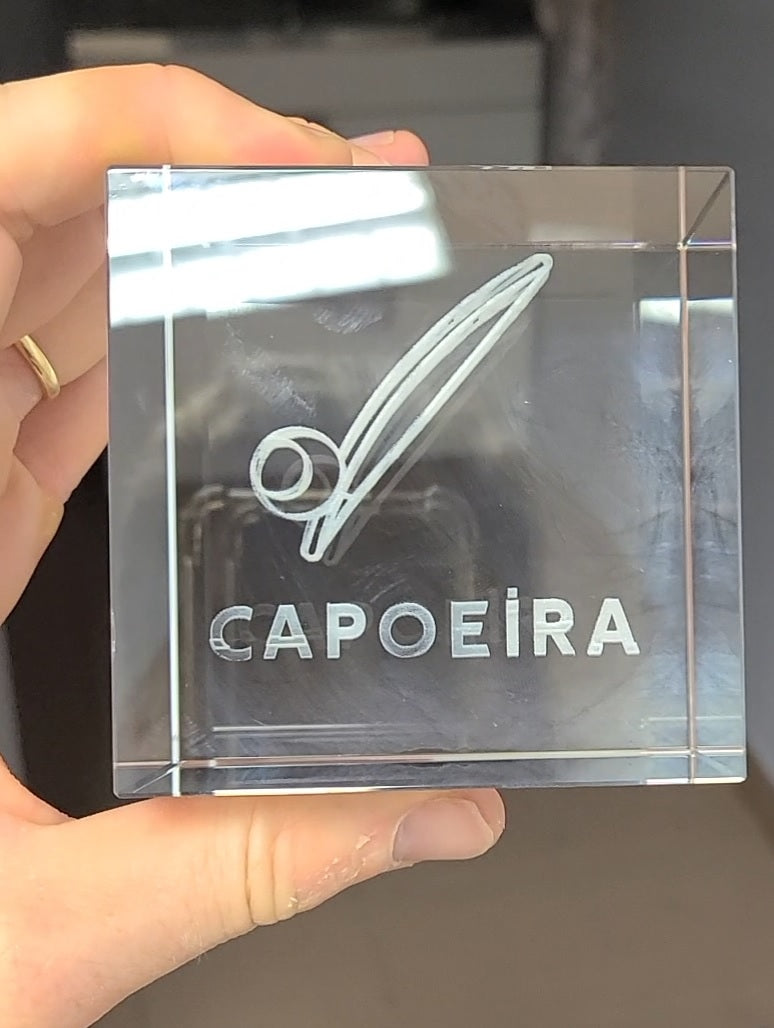
The digraphe is available in wood and crystal. In its wooden version, the material warms slightly under the light, the natural fibers give character to each letter. In its crystal version, the shine of the glass catches the ambient light, diffuses it, and transforms the sculpture into a soft prism. In both cases, laser engraving guarantees a precision that the hand alone could not achieve: each letter cut to a tenth of a millimeter, the angles calculated so that the fusion of the first names works every time.
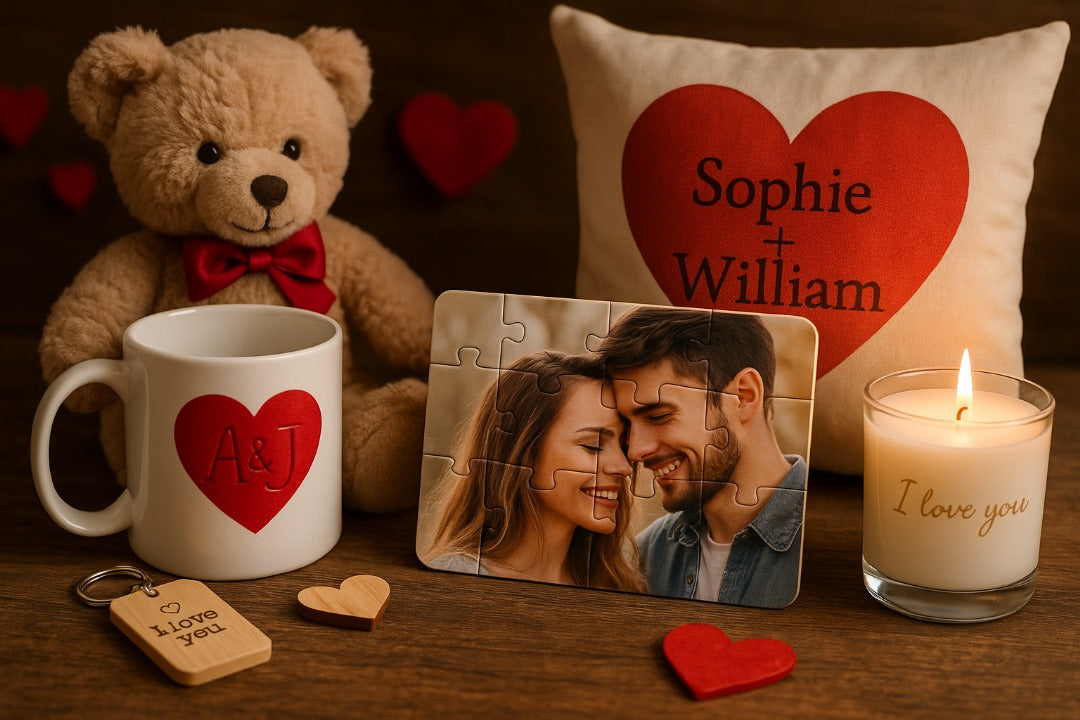
It is not a mug with a printed first name. It is not an embroidered cushion, useful but predictable. The digraphe is a personalized decorative object that sits, is looked at, and is shown. Placed on a shelf, it changes its story depending on where you stand in the room. One first name engraved on the window side, the other toward the door. The fusion of first names then becomes a permanent play with space and light.
Each digraphe is made in France, in a workshop dedicated to this unique object. French craftsmanship is not a marketing promise here: it is the very condition of the precision that the optical principle requires. An approximate engraving, and the illusion collapses. French manufacturing ensures that the two first names are truly legible, without ambiguity, from their respective angles.
This is what distinguishes this unusual gift from all the Christmas gift ideas you usually find: it is not consumed, it does not wear out, it is not stored in a drawer. It stays there, on the shelf or the desk, and tells two people to anyone who takes the time to change their angle. A timeless object, in the literal sense of the term.
Personalized Christmas gift ideas for everyone you want to delight
A just gift is first and foremost a gift designed for someone in particular. Not for "a woman," not for "a man": for her, for him, for both of them. Personalization makes this distinction that store shelves never make.
A Christmas gift idea for her
She wears memories like others wear jewelry. So give her both at once. The engraved Digraphe earrings merge two first names into a piece she will wear near her face every day. A surprise gift that is looked at, shown, and told.
- Personalized earrings: two first names, a single pair.
- Crystal digraphe: light passes through the personalized crystal and reveals the first names depending on the angle of the gaze.
- Personalized Christmas gift box: the object placed in a case, ready to move her.
The Christmas gift idea for women that stands the test of years is the one that carries lasting meaning, not a passing trend.
A personalized gift for him
For personalized men's gifts, break away from the traditional. An original laser-engraved wooden digraphe makes a sober and strong presence on a desk or shelf. From the left, a first name. From the right, the other emerges. Silent, almost mischievous.
- Original digraphe: decorative objects to give for Christmas that tell a story without a word.
- Wood engraving with a first name or a date: a personalized wooden object, clean and durable.
For a couple: an original anniversary or wedding gift
Two first names merged into a single object? That is exactly what the digraphe is. A couple's gift that says better than any card what you think of their shared story. For a personalized wedding gift or an original anniversary gift, the object goes beyond the date it celebrates.
- Original or crystal digraphe: the two first names of the couple, engraved in France.
- Gift box given together: an off-calendar Valentine's gift, but always just right.
For a birth or a baptism
A personalized birth gift often lasts longer than the child remembers it. That is precisely its strength. Giving parents a crystal digraphe bringing together the two first names of the couple, at the moment their family is growing, transforms a decorative object into an emotional landmark.
- Personalized crystal with the parents' first names: luminous, symbolic, timeless.
- Wood engraving for the baby's room: simple, tangible, filled with tenderness.
For all occasions, a single common thread
Birthday, Christmas, wedding, birth: the occasions change, the gesture remains the same. An engraved object, designed for a specific person, does not age. It settles in. It stays. And every time you look at it, it reminds you who chose it, and why.
That is what personalization does that no catalog gift will ever do: it transforms a decorative object into a gift of tenderness that tells your story together.
French craftsmanship: what it really changes for your gift
An object made in France is not just a label. It is a story of hands, of material, of deliberate choices. And when this gift also carries the first names of two people who love each other, the origin ceases to be a detail: it becomes part of the symbol.
French craftsmanship is based on know-how passed down and refined. A workshop that works wood, crystal, or laser engraving in France knows its materials intimately. It chooses the quality of the plates, sets the precision of the beam, checks each piece before it leaves. A handcrafted gift that resists time, moves, and years. Not an object you throw away after the season. A piece you keep.
In contrast, the mass-produced object follows an inverse logic. Produced on an assembly line, standardized, designed for volume. It sometimes arrives without any apparent defect, but it has nothing to tell. No hand held it during its manufacture. No one checked that the first name was legible, that the curve was right, that the light passed through the crystal as planned. Traceability, in this case, stops at a barcode.
Choosing a gift made in France is also choosing a different relationship with the object. You know who made it, how, and why. This transparency transforms the gift even before it is unwrapped. Ordering from someone who works well is already a way of saying: I took the time to look.
And then there is this notion of a custom-made gift, which touches the heart of the digraphe. Each creation merges two first names into the same form: from one angle, one emerges; from the other, the second appears. Since no pair of first names is ever repeated exactly, each digraphe is unique by nature. Laser engraving carves this uniqueness into the material, with a precision that the eye perceives and the hand feels. This is not cosmetic personalization. It is a unique decorative object, designed for two specific people, and for them alone.
A timeless gift is rarely born of chance. It is born from a thoughtful gesture, localized know-how, a clear intention. French manufacturing guarantees all of this at once: the quality of the material, the legibility of the engraving, the durability of the whole. And for Christmas gifts for couples, this dimension takes on even more meaning: two first names engraved in France, in a workshop that knows its trade, on an object that will stand the test of decades.
- Traceability: we know the origin of each material and each step of manufacture.
- Durability: a well-made object does not degrade after the first winter.
- Uniqueness: two first names never produce exactly the same visual result.
- Human connection: behind each piece, an artisan set, adjusted, checked.
A gift full of meaning is not measured by the weight of the packaging. It is measured by what remains, long after New Year's Eve.
How to give a personalized Christmas gift that truly makes a lasting impression?
An original Christmas gift does not only depend on what it is. It depends on how it arrives, how it is discovered, how it is told. That is what many forget when wrapping.
Let's start with the beginning: choosing well means first looking closely at the person. What first names make up your shared story? What date alone summarizes what you share? A gift full of meaning always comes from observation, never from a ready-made list.
For the digraphe, the process is simple. You choose two first names, your own or those of the couple you are giving it to, and the French workshop merges them into a single object. From one angle, the first name appears. From the other, the second emerges. It is not a gadget: it is a surprise gift in the literal sense, a personalized decorative object whose secret is revealed at the very moment of discovery. That moment is not improvised.
Three gestures to amplify the emotion
- Prepare the scene. Place the digraphe on a surface where the light touches it. Invite the person to turn it slowly in their hands. Let the silence do its work. Magic is not commented on, it is experienced.
- Slip in a handwritten note. Not a novel. Three lines are enough: why these two first names, why today, why you. A gift that tells a story is always doubled by a voice. Yours, on paper, becomes part of the unforgettable memory.
- Opt for simple wrapping. Natural kraft paper, a simple ribbon, an unillustrated box. When the wrapping does not shout, the object can speak. An unusual gift does not need rhinestones to exist.
The emotional bond that this object creates depends on its lifespan. It does not end up at the bottom of a drawer. Placed on a shelf, on a desk, on a nightstand, it comes back to life with every pass, with every new look that, without knowing it, finds one of the two first names.
That is the whole difference between giving a unique object and giving a simple token. One is consumed, the other is contemplated. One is forgotten, the other settles in. A gift of tenderness, engraved in France, made by hand, keeps something irreplaceable: the concrete trace of an emotional bond between two real people.
What if Christmas was the occasion to give not an object, but a story?
FAQ
What Christmas gift to choose when you don't know what to give?
A personalized object with the person's first name, or the two first names of a couple, erases hesitation. It says something that words cannot always formulate: "I thought of you, specifically." A digraphe, for example, brings together two first names in a single piece. It is concrete, it is rare, and it does not end up in a drawer on December 26th.
What Christmas gift to give your boyfriend?
Something that tells your story together. Not another gadget, not a generic gift card: an object that carries your two first names, engraved or merged together in the material. A digraphe merges two first names into a single optical illusion. One appears from the front, the other emerges when the angle changes. It is intimate, unexpected, and made in France.
Why do we give gifts at Christmas?
The custom is old and mixes several traditions: religious, popular, and very human. Sociologist Marcel Mauss showed it: giving is never neutral. It connects two people, it says something about the bond. Christmas has become the time of the year when we make this bond visible. The gift is not a social obligation: it is a way of making yourself present in the other person's life.
What is the difference between a personalized Christmas gift and a standard gift?
A standard gift fills a slot. A personalized gift says something that the other cannot find elsewhere. A first name in the material, a date, two stories united in a single object: it changes the nature of the gesture. The object becomes a memory, not an acquisition. And that is the difference we feel even years later.
When do you order a personalized Christmas gift?
As early as possible. Handmade items, such as digraphs, require actual time to create. Depending on the time of year, lead times vary. In December, demand rises quickly. To ensure the gift arrives under the tree, it is best to plan ahead and check the lead times indicated at the time of ordering.
Personalized Christmas gifts that stand the test of time
A personalized Christmas gift is not simply an item with a name on it. It is a decision: to choose uniqueness over convenience, connection over transaction. The digraph embodies this idea in its most unexpected form, where two names coexist in a single volume and reveal, depending on the angle, one identity or the other. Material becomes language. And the question that remains open is this: what story do you want to engrave, and for whom?