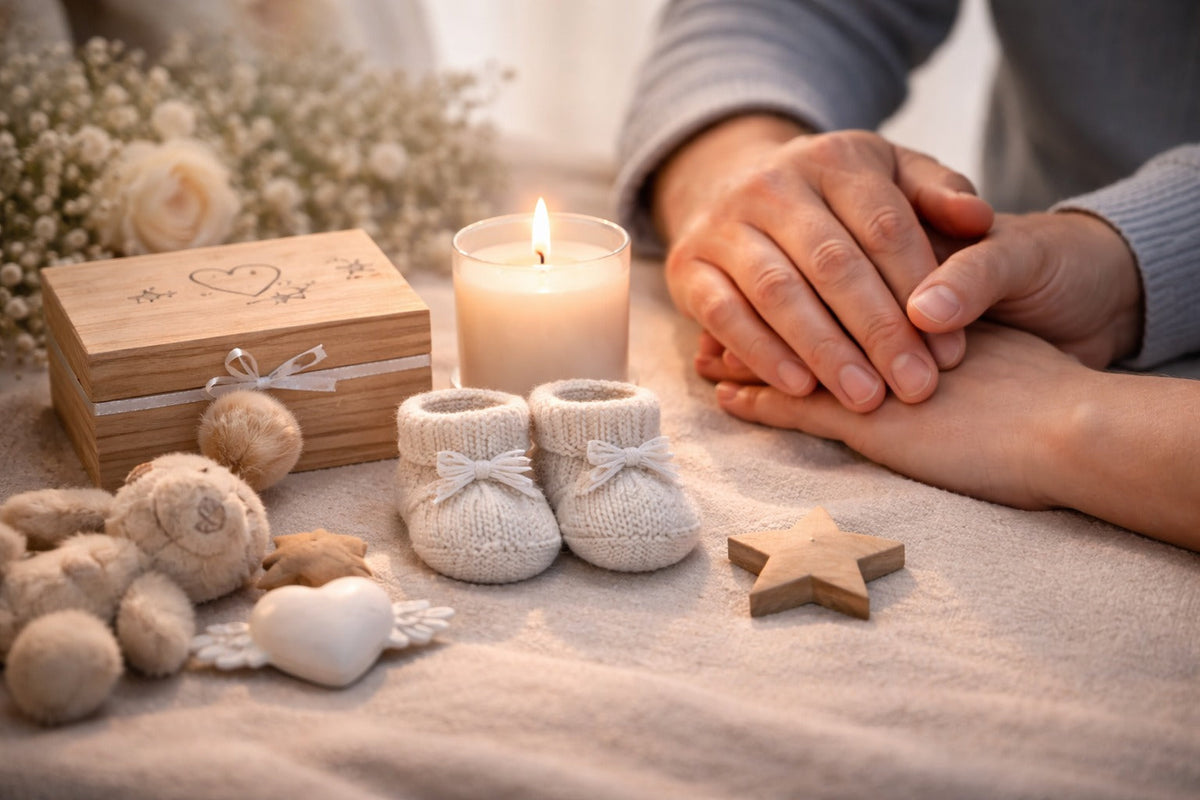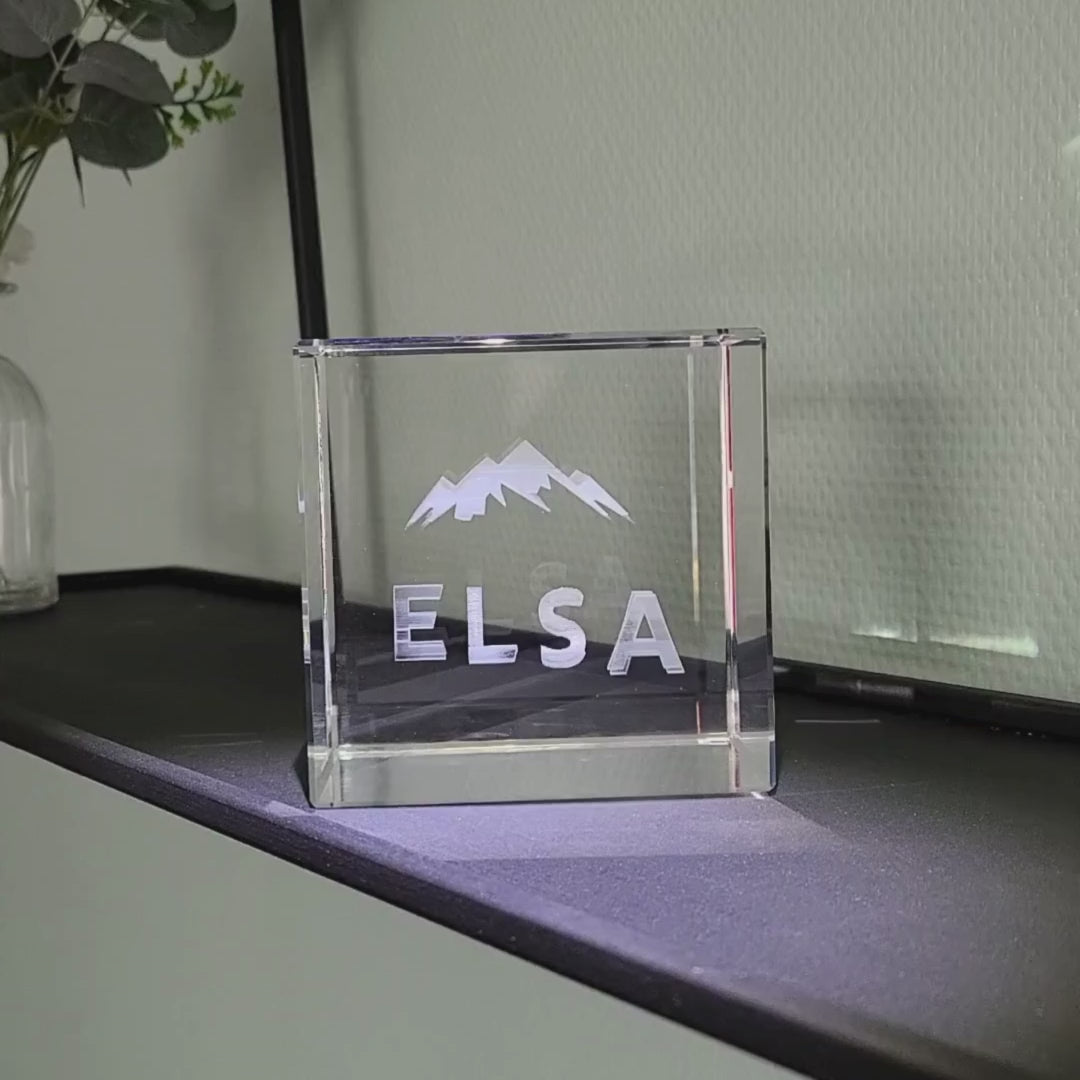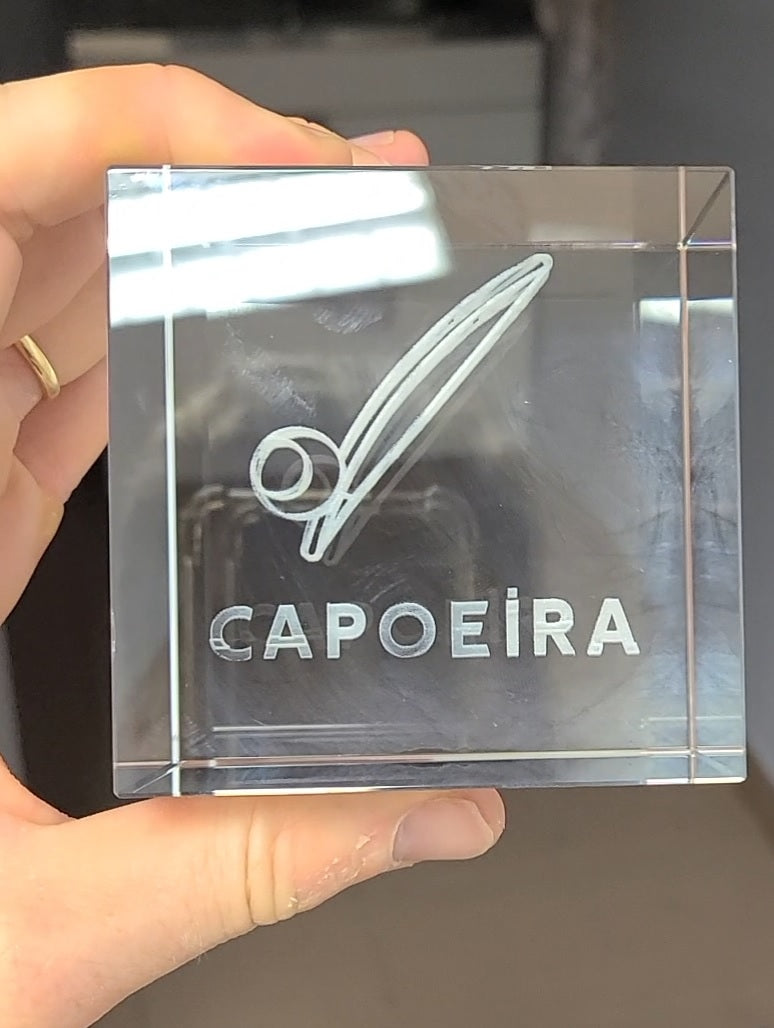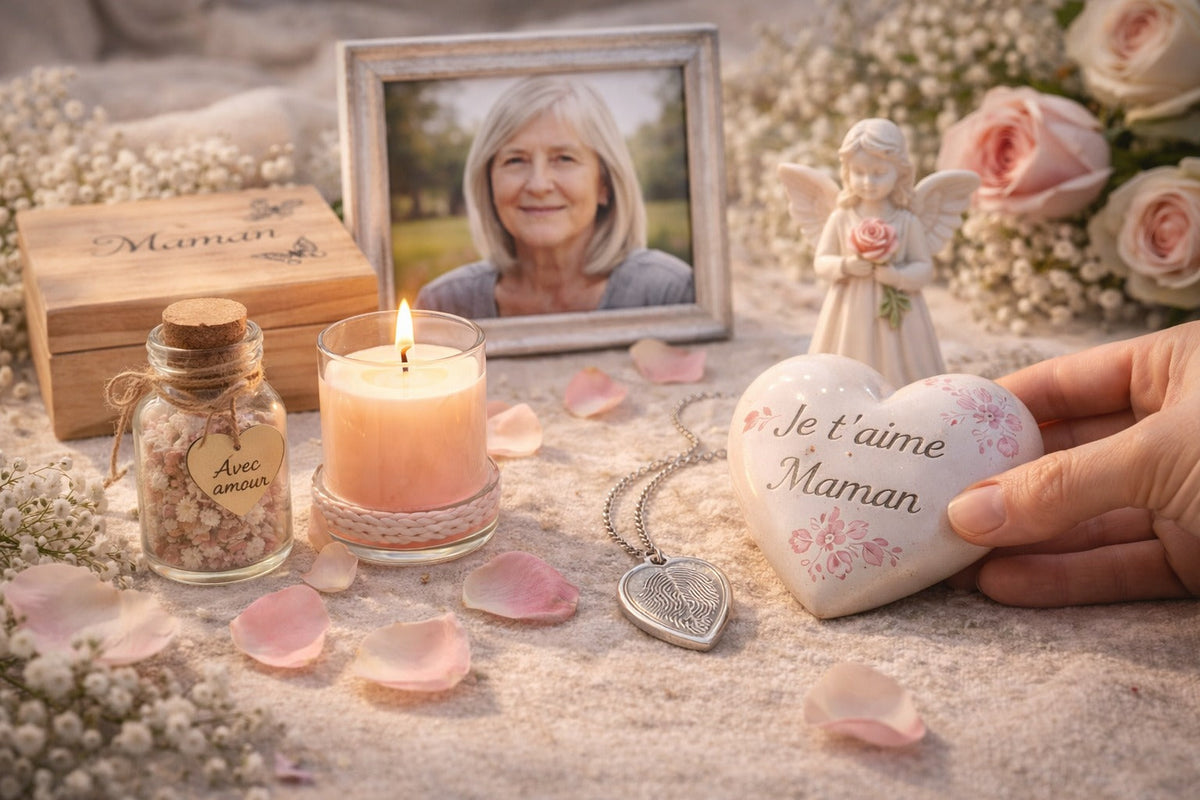
For a gift to mark the loss of a mother, the gestures that truly touch are those that keep a trace of her: a piece of jewelry engraved with her name, a personalized item that becomes part of everyday life, or a crystal digraphe where two names merge in the glass depending on the angle of view. These fifteen ideas range from the most intimate to the most poetic, to help choose thoughtfully what to offer someone who has just lost their mother. The loss of a mother is part of the broader question of a gift to accompany grief.
What gift to offer for the loss of a mother: the most thoughtful ideas
There are pains that change the shape of the world. Losing one's mother is one of them. It is not just grief: it is an internal reorganization, a silence that takes up all the space. Finding the right gesture in this space requires rare thoughtfulness.
The question often comes up, awkward and sincere at the same time: what gift for the loss of a mother when you don't know what to say? The answer lies less in the value of the object than in what it carries. A carefully chosen symbolic gift says what words cannot manage to express. It says: I remember her with you.
Here are the ideas that, in the face of the loss of a mother, strike just the right chord:
- An engraved piece of jewelry, an initial, a date, a name, worn against the skin like a maintained bond
- A personalized keepsake, a frame, a nightlight, an embroidered cushion, that settles into everyday life without being jarring
- A comforting candle, engraved with a word or a quote, to light a soft light on difficult evenings
- A symbolic plant, a bonsai, an orchid, an eternal rose, living and discreet, a lasting plant presence
- A carefully written, personal condolence card, which names the deceased mother and tells a shared memory
- A meaningful decorative object, such as a crystal digraphe where two names merge in the glass depending on the angle of view
These gifts work because they combine personalization and gentleness. They do not claim to comfort in a single gesture. They extend the symbolic presence of the deceased mother in the home, in gestures, in the morning light.
This is the whole difference between an ordinary sympathy gift and true support during a period of grief: one fills the hands, the other inhabits the heart. A condolence card with a true anecdote is often worth more than a bouquet without memory. An object engraved with the mother's name becomes, over time, an emotional landmark that the grieving family keeps for years.
Honoring the memory of a mother means choosing what remains. Not what passes.
Personalized gifts: keeping a mother's memory in a unique object
Personalizing a gift means refusing the anonymity of grief. It means saying that this woman, this mother, deserves an object unlike any other. An engraved name, a chosen date, a phrase that belonged to her: every detail transforms a simple object into a personalized keepsake charged with a unique story. The principle applies to any personalized gift after a death.
Jewelry, portraits and everyday objects
The engraved commemorative piece of jewelry remains one of the most intimate gestures one can make. A necklace bearing the initials of the deceased mother, a bracelet stamped with a date, a signet ring where a handwritten word is reproduced as is: so many fragments worn against the skin, present at every moment. Some creators even offer to place a fingerprint on it. The ultimate trace. Irreplaceable.
The personalized portrait takes another form of presence. A watercolor, a drawing with familiar lines, framed in the entryway or placed on a bedside table: a mother's memory becomes visually anchored there, without the need for words. The engraved nightlight, on the other hand, speaks at night. Lit in the dark, it draws a soft light whose warmth evokes a caress. A name, a nickname, a short phrase engraved in wood is enough to give it this soul.
- Engraved commemorative jewelry: necklace, bracelet, signet ring with name, date or handwritten word
- Personalized portrait: framed watercolor or illustration with calligraphed names
- Keepsake cushion: to hug, embroidered with a message, anchored in everyday life
- Engraved nightlight: night light bearing a word of love
- Engraved plaque: sober tribute, placed or hung, visible every day
The crystal digraphe: two names, a single gaze
Among the personalized decorative objects available today, the crystal digraphe holds a special place. The object relies on an optical illusion: two names merge in a single cut crystal shape, laser engraved. Depending on the angle from which you stand, one or the other name appears, then disappears, then returns.
Imagine the mother's name and the child's name, intertwined in this way. The gaze slides, hesitates, discovers. A symbolic presence that reappears depending on the daylight. This is exactly what grief does to memories: they fade, then return suddenly, in a reflection, in the corner of a room.
The personalized digraphe is made in France, laser engraved with the names chosen by the person who brings it. It is not a simple decorative object: it is an eternal tribute to a bond that nothing erases. Designed to last, designed to move. Every time light passes through it, it reminds us that the two names, one day, were one.
Symbolic and floral gifts: saying with symbols what words cannot
Some losses leave one speechless. In the face of the loss of a mother, condolences sometimes ring hollow, the phrases fade before even reaching the heart. The symbol takes over. Not to replace words, but to hold when they are exhausted.
Flowers naturally impose themselves, in France, as a first gesture of sympathy. The chrysanthemum remains the quintessential flower of mourning in our culture. But a bouquet wilts in a few days. A preserved eternal rose goes through the seasons without losing its shape or color. A living plant like an orchid or a bonsai lasts much longer than a cut bouquet. It grows. It continues. Like the memory of a mother. Families also bring flowers to graves on the occasion of the All Souls' Day holiday.
The mother-daughter relationship weaves invisible threads that span a lifetime. To honor this bond, some objects speak better than a long speech. The commemorative wind chime is the sweetest example. Suspended from a window or in a garden, its aluminum tubes vibrate at the slightest breath of air. A clear sound, repeated, which recalls a presence without disturbing the silence. Discreet, but real comfort.
The personalized candle works differently. It transforms darkness into light, literally. Engraved with a name, a date, a chosen phrase, it creates an intimate ritual. Lighting a candle for one's mother is a thoughtful gesture as much as a symbol of grief: light as emotional comfort, as a promise that something continues to shine.
The keepsake cushion, on the other hand, is for those who need a physical anchor. Embroidered or printed with a photo, a message, it slips into everyday life. You pick it up. You put it down. It is there, in the house, sometimes in bed. It says that maternal love does not disappear with the body.
And then there is the condolence card. Simple, handwritten, slipped into an envelope. It often remains on the edge of a piece of furniture for weeks. Proof that a right word is sometimes worth all the objects in the world.
Each of these gifts for the loss of a mother shares the same logic: to maintain a symbolic presence where emptiness threatens to invade everything. These are not objects of quick consolation. They are anchors. Gentle reminders that a mother's heart continues to beat in those who loved her.
Offering to a grieving family: practical gifts to ease everyday life
The funeral is over, the house empties. Loved ones leave, silence settles in, and the family finds itself alone facing an everyday life that nevertheless requires them to keep functioning. This is where thoughtful gifts take on their full meaning: not to comfort in an instant, but to support over time.
What does "choosing well" really mean when a family is going through one of the most exhausting periods of its existence?
It often begins with the simplest gestures. A prepared meal brought to the home frees up an hour of mental load on an already heavy day. Homemade food carries a warmth that words do not always have. If possible, opt for freezer-friendly dishes, in disposable containers: the family chooses when to eat, without worrying about the dishes.
A care basket meets another need: that of taking care of oneself, even briefly, when one tends to forget oneself. Tea, scented candle, soft throw, body lotion. Nothing spectacular. Just the promise of a moment of sweetness stolen between two administrative formalities.
A grocery gift card, on the other hand, speaks of affectionate pragmatism. The family chooses what they need that day. Coffee, milk, fresh products: invisible, but real needs that no one thinks to mention in the days following a death.
And then, there is the book. Bringing a book on grief to a bereaved person is offering them a hand in the weeks to come, not just in those preceding the burial. Living Grief One Day at a Time by Christophe Fauré accompanies this journey with benevolent precision. Through Grief by Sylvie Tenenbaum offers concrete landmarks. These readings become discreet companions to get through the period of grief at one's own pace.
- A prepared meal brought to the home, in a disposable and freezable container
- A care basket: tea, candle, throw, lotion, mask
- A grocery gift card for everyday needs
- A book on grief, such as those by Christophe Fauré or Sylvie Tenenbaum
These gestures all say the same thing: "I am thinking of you, not only on the day of the funeral, but also the next day, and the one after. " This is perhaps the most sincere concrete help one can offer to a grieving family. For parents who have lost a child, gifts adapted for bereaved parents also exist.
How to choose a gift well after the loss of a mother: the keys to not make a mistake
Choosing a gift for the loss of a mother cannot be improvised. It is not a question of budget or originality at all costs: it is a question of thoughtfulness. The right gift is the one that stands the test of time without fading, the one the bereaved person still remembers a year later, because it tells them something essential about their mother.
Here are four concrete criteria to avoid making a mistake.
- Adapt to the relationship. A close friend does not bring the same thing as a coworker. The more intimate the bond with the bereaved person, the more personal the gift can be, charged with shared memory.
- Prioritize durability over the moment. A candle burns out. An engraved object, on the other hand, remains. The most memorable sympathy gifts are those you find on a shelf months later and that still evoke an emotion.
- Think about personalization. A name, a date, a short phrase: these details transform an ordinary object into a unique tribute. A personalized digraphe, for example, merges two names in an optical illusion made in France. It is not a generic keepsake. It is a work that tells a specific bond, that of a mother and her child.
- Avoid impersonal clichés. Chocolate condolences or the standard bouquet quickly pass. The meaningful object, chosen with a truly thoughtful gesture, leaves a different mark.
And what if the gift seems modest to you? Dare to give it anyway. What matters is not the market value, but the visible intention behind it.
Are there commemorative jewelry pieces for a mother?
Yes. Engraved jewelry is among the most appreciated sympathy gifts after the loss of a mother: a necklace with an initial, a bracelet bearing a date, or a personalized digraphe in jewelry form. These objects can be carried everywhere, against oneself.
What can be written on a tribute object to one's mother?
A name is enough, sometimes. A birth or departure date. A short phrase: "You remain my light", "Mom, forever". The shorter it is, the more it is engraved.
The most beautiful gift to honor the loss of a mother is the one that says, silently but surely: she existed, she still matters.
FAQ
What gift to choose for someone who has lost their mother?
A personalized object often touches more thoughtfully than a bouquet. An engraved piece of jewelry with the deceased mother's name or birth date, a soothing candle, a keepsake frame: these gestures say what words cannot manage to express. The essential thing is that the object carries a trace of her, visible and lasting.
What is the ideal gift to honor the memory of a deceased mother?
A personalized keepsake that remains in everyday life: a pendant engraved with an initial, a candle with a comforting quote, a notebook to write down memories. A crystal digraphe where two names merge in the glass depending on the angle of view is also a discreet, poetic, and unique tribute.
What can be offered to a grieving family?
Soft and meaningful objects: a throw, a symbolic plant, a commemorative piece of jewelry, a card written with a true anecdote about the deceased mother. Naming the person we mourn, in the gesture as well as in words, is often what matters most to a grieving family.
Should a grief gift be personalized?
Personalization transforms an ordinary object into an emotional landmark. Engraving a name, a date, a phrase that belonged to her: it says that this woman was unique and that she is not forgotten. An anonymous gift will comfort for a moment. A gift engraved in her name will last for years in the family's memory.
When to give a gift after a loss?
In the first few days, a simple gesture is enough: a sincere card, a plant, a homemade dish. A personalized keepsake can be brought later, when the family is looking for ways to keep the presence of the deceased mother. There is no set deadline. Gentleness, on the other hand, has no expiration date.
A gift for the loss of a mother is a way of saying: she is still here
Choosing a gift for the loss of a mother means refusing that the disappearance be total. A name engraved in crystal, a light lit in the dark, a cushion held in one's arms: these objects do not comfort all at once. They last. They remind. They keep the place of the one who has left. And over time, they are the ones that become the strongest emotional landmarks, those that a grieving family sometimes passes on, without even thinking about it, to the next generation.