For grieving parents, symbolic and personalized gifts—such as engraved jewelry, a keepsake box, a photo album, or a commemorative object bearing the child's name—are the ones that truly stand the test of time and honor their memory. Practical gifts, on the other hand, ease the daily routine of the first few days. This article details each category, explains why certain objects remain for decades while others fade away, and guides you toward the right gesture—one that says, without words, what love can no longer articulate.
What gifts to offer grieving parents: ideas that truly touch the heart
When deep grief strikes a family, words fall short. You search for phrases, hesitate, and stay silent. The desire to be there remains total, almost urgent. It is in this space between helplessness and love that a tangible gesture finds all its power: it says what the voice cannot manage to articulate. An object carefully placed on a doorstep is a presence—tangible proof that the lost child still matters, and that the loss of a child will not be walked through alone.
Two intentions naturally emerge regarding gifts for grieving parents. On one hand, practical gifts: prepared meals, delivered groceries, daily help. These concrete gestures lighten the burden of daily life when even boiling water seems insurmountable. On the other hand, symbolic gifts, designed not to make daily life easier, but to honor the memory of the deceased child. These are the ones that last. These are the ones parents keep for years, for decades, and sometimes for a lifetime.
Among the most common ideas from those looking to support parental grief are:
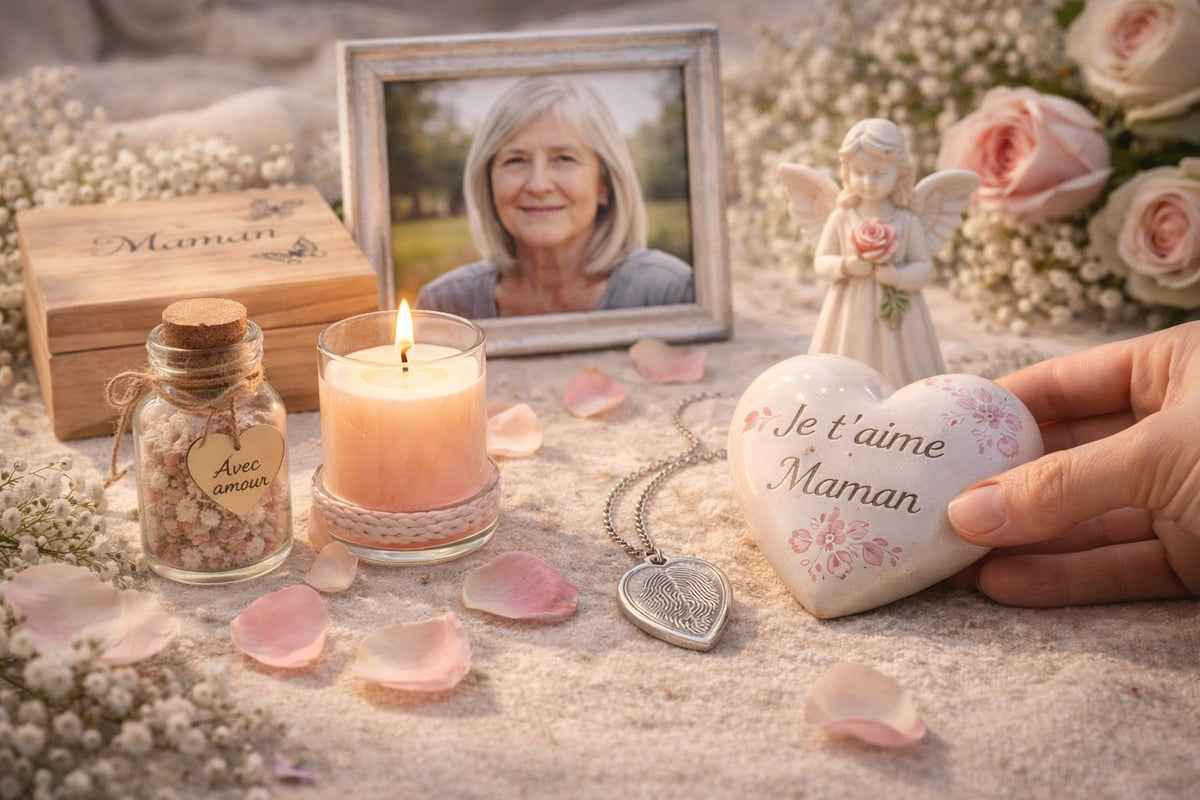
- symbolic and personalized objects (engraved jewelry, sculptures, unique works of art)
- keepsake gifts: memory photo albums, picture frames, memory boxes
- a memorial plant or a tree to be planted
- commemorative candles
- condolence cards, sometimes accompanied by a handwritten message
- bereavement gift baskets, which combine care and comfort in one thoughtful gesture
- memory books, gathering letters, photos, and tributes to the memory of the deceased
Each category meets a different need. But there is a clear boundary between the bereavement gift that eases the moment and the one that endures over time. A hot meal nourishes the body for that evening. A symbolic object nourishes something deeper: the certainty that the child existed, that they mattered, and that they will continue to exist in the eyes of those who loved them.
This is where the most thoughtful condolence gifts distinguish themselves from the rest. They do not seek to console, which would be vain. They keep the memory of the deceased alive, giving the grieving family a visible support—an object to return to, to touch, to weep over, and sometimes to smile at.
Choosing a gift for someone in mourning requires discernment. Not expense, not extravagance. A true gesture, chosen with the heart, capable of lasting through the months and anniversaries without fading. The symbolic ideas designed to honor a child's memory, detailed in the next section, meet this requirement perfectly.
Symbolic gifts to honor a child's memory: an overview of essential ideas
Which symbolic object should you choose to tell grieving parents that their child still matters, and always will? Some gestures endure through grief better than others. Here are those that return, generation after generation, because they speak a truth about memory and love.
-
Customized commemorative jewelry. A silver or gold pendant with an engraved name, a date worn against the skin, or a subtle initial on a delicate chain: engraved jewelry becomes an everyday talisman. It is not always seen, but it is felt. This is precisely what many parents seek: to keep something of the lost child close to them, without having to explain it. Some choose a birthstone; others, the sheer power of an engraved name. Every form is appropriate, as long as it comes from the heart.
-
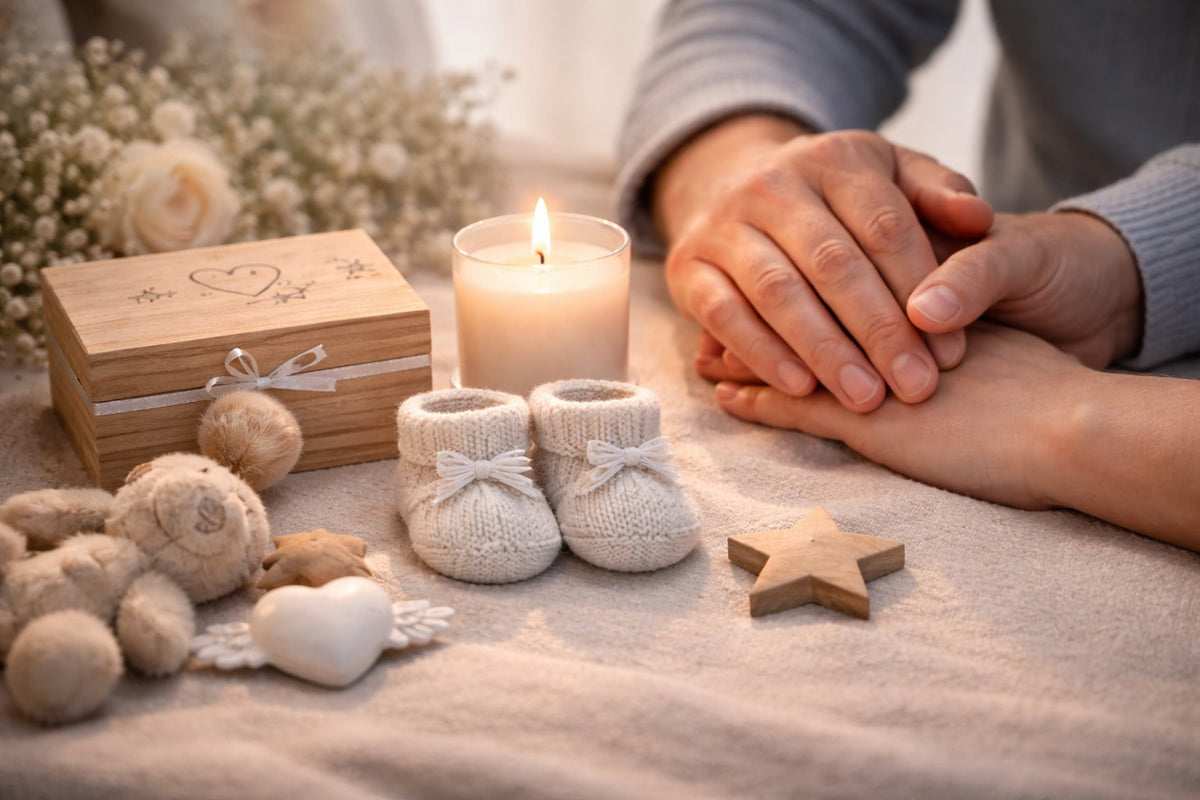
The memory box. A memory box gathers what words cannot contain: a hospital wristband, a handprint, a letter, a lock of hair. It opens when the heart decides, and closes just as gently. Engraved with a name or a date, it becomes a vessel of memory that parents often keep their whole lives.
-
The memory photo album or picture frame. A memory photo album tells a story, even if that story was short. It says: you existed, you were loved, you belong to our family. A photo frame, resting on a shelf or a nightstand, captures a gaze, a silhouette, a real moment. These are personalized condolence gifts that parents never tuck away in a drawer.
-
The commemorative candle. Lighting a candle creates a ritual—a light in the silence, a thought taking shape. Engraved or printed with a name, a date, or a message, a personalized commemorative candle becomes a landmark during difficult days, a gentle gesture to perform when evening falls. It burns. It warms. It reminds.
-
The memorial tree or plant. Planting a memorial tree is sowing something living where a void has taken hold. Cherry, rose, olive: each variety carries its own symbolism. The tree grows, blooms, and cycles through the seasons. A memorial plant, more modest, holds the same promise in an apartment or on a balcony. Watering, observing, watching it grow: these are all small rituals that anchor memory in the present.
These ideas appear in all efforts to support parental grief because they share the same logic: they keep a visible, tangible trace of the departed child. They convey that the tribute does not end with the funeral.
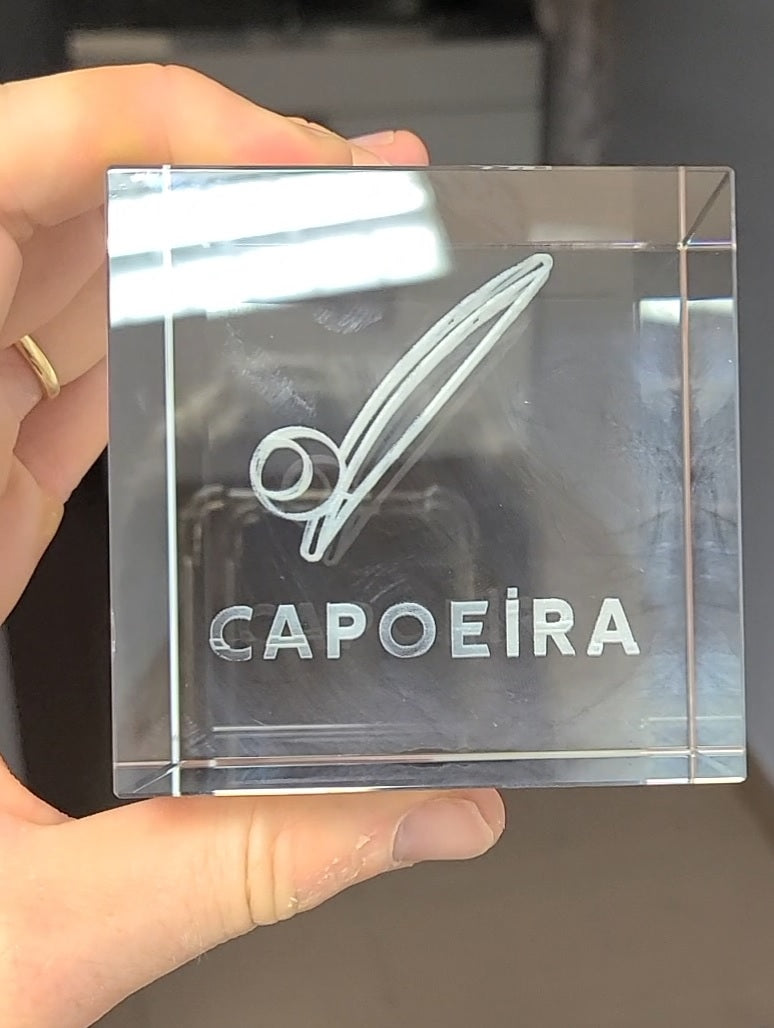
But among all these keepsake gifts, one goes further. The crystalline digraph fuses two names into a single object, visible depending on the angle of view. The child's name is laser-engraved in the La Roche-sur-Yon workshop, intertwined with that of a parent, a brother, or a sister. A personalized gift that bears not only a memory: it bears a bond, still alive, between two beings. Another way of holding someone in the light.
Perinatal loss, miscarriage, stillbirth: is it appropriate to give a gift?
The question deserves a frank answer: yes. Absolutely yes. After a miscarriage or stillbirth, a gift is not out of place. It is, very often, deeply welcomed, even if no one says so.
Perinatal loss remains one of the most socially invisible forms of grief. Society poorly recognizes this loss. Few rituals exist. Condolences arrive in trickles, or not at all, because those around them do not know how to react to a child many never saw. Yet, this child existed in the parents' hearts, bodies, and dreams—for weeks, sometimes months. They had a name, in some cases. An imagined place in an apartment. An entire future.
This silence from others hurts as much as the absence itself. A symbolic object breaks this silence in a way that words cannot always manage.
A candle engraved with the child's name, a symbolic present bearing a date, a digraph merging the child's name with that of a parent: these gestures say something simple and essential. This child existed. This loss is real. You were parents.
For parents who lost a child in the first hours of life, or even before birth, this recognition changes everything. The pain of grief does not diminish, but it knows it is seen.
Some tips for presenting such a gift appropriately:
- Choose a calm moment, if possible not the immediate day after the loss. The first month following the death is often cited as an opportune time for a gesture of support, when friends and family begin to drift away, but the pain remains intense.
- Accompany the gift with a short, handwritten message of comfort. No explanations, no justifications. Three lines are enough: name the child if they have a name, say you are thinking of the parents, and leave room for silence.
- Include a few words such as: "I am not trying to replace what you have lost. I just want you to know that I have not forgotten."
Some thoughtful gifts stand the test of time. An object like the digraph, which merges two names into one form depending on the viewing angle, tells grieving perinatal parents something special: these two lives are linked, visibly and lastingly. The child's name does not disappear into a drawer; it inhabits an object placed in the light of daily life.
Helping a grieving family does not always require grand declarations. A concrete gesture, a carefully chosen object, a sincere message: these are what remain long after everyone else has gone home.
How to choose and give a bereavement gift: gestures that truly offer support
There is no perfect moment to reach out to grieving parents. However, when matters as much as what. The first few days following the death are often saturated: funerals, administrative tasks, visitors. An immediate and concrete gesture of support—a bereavement gift basket filled with prepared meals, coffee, and basic supplies—meets a real need without demanding anything from the family. It is not a symbolic gift, but it is a right one.
The lasting object, however, is worth waiting for. A few weeks after the funeral, when silence settles in and loved ones gradually pull away, the pain of grief takes up all the space again. It is often in this particular hollow that receiving a personalized gift touches most deeply. The child's first birthday or the first month following the death: these dates call for a gesture, a concrete thought that says "I have not forgotten."
What you write matters as much as what you give
An object without words is sometimes enough. But a handwritten message, even a short one, changes everything. Printed condolence cards with generic phrases leave parents alone, facing words that do not truly see them. Three sincere sentences are better than a conventional paragraph. Name the child. Mention a specific memory, if one exists. Simply writing "I am thinking of him" or "I am thinking of her" is enough, and carries more weight than grand declarations.
Here is what a sincere message of comfort should always avoid:
- clichés ("they are in a better place," "time heals all wounds")
- comparisons with other losses
- advice on how to grieve
- forgetting the child's name
What is better to avoid when choosing a gift
A generic material gift, with no connection to the child or the family, risks seeming out of place. Objects that are too festive, too neutral, or too impersonal make no room for grief: they bypass it. Helping a grieving family means asking yourself what, in the chosen object, carries a truth. A condolence gift does not need to be expensive. It must be thoughtful.
Collective crowdfunding works when the family has expressed a specific need, such as a bereavement trip or a memorial project. Without this context, it may seem cold and too distant to support parental grief in its most intimate form.
Memory does not wait for the right moment
What lasts longest in a bereavement gift is that which keeps the name alive. Not locked in a box, not displayed like a relic. Living, in the literal sense: visible, touchable, present in daily life. An object that bears the child's name—showing it to those who take the time to look—transforms memory into something gentle rather than fixed. The bond does not fade. It changes form, seeking a material in which to be inscribed, an angle of light in which to reappear.
FAQ
What symbolic gift should I choose for parents who have lost a child?
Gifts that stand the test of time are those that keep the child's memory alive: a personalized object engraved with their name, a memory book gathering letters and photos, or a unique sculpture. The intention matters more than the value. What grieving parents keep for years is rarely the useful; it is the gesture that says: they existed, they still matter.
What can I offer a grieving family to bring them comfort?
Two gestures complement each other without replacing one another. Practical gifts—prepared meals, daily help—ease the first few days. Symbolic gifts accompany the weeks, months, and anniversaries. A commemorative candle or an object bearing the lost child's name says, without a word, that the family is not alone.
How can I choose a condolence gift that is not awkward?
Avoid gifts that seek to console or "turn the page." Grieving parents do not need the pain to be erased; they need the loss to be acknowledged. A right gift is one that honors the child's memory without trying to fix the irreparable. Sobriety, personalization, and the sincerity of the gesture make all the difference.
Is there a gift that supports parental grief over the long term?
Yes. Symbolic and personalized objects—engraved jewelry, unique works, photo albums—are those that grieving parents keep for decades. Unlike flowers or meals, they remain. They become anchors: something to touch, to look at, to show. An object that bears a name spans time in a way that no words can quite equal.
Gifts for grieving parents that keep a presence alive
A hot meal disappears that very evening. An engraved piece of jewelry, however, remains. A keepsake box remains. An object that bears that child's name remains—placed on a piece of furniture, held in the hands on difficult days. This is the whole difference between the gesture that consoles the moment and the one that accompanies grief over time. The most thoughtful gifts for grieving parents do not seek to erase the pain; they seek to say that this child existed, that they still matter, and that they will not be forgotten. And sometimes, that is all a family needs to keep moving forward.