On November 1st, many French people visit cemeteries, chrysanthemums in hand, believing they are celebrating All Souls' Day. However, All Saints' Day and All Souls' Day are two distinct occasions, separated by twenty-four hours and a world of meaning. Understanding their origins, rituals, and forms across the world means rediscovering a universal relationship to the memory of departed loved ones, a bond that no single date can truly exhaust.
Table of Contents
- All Saints' Day: Much More Than All Souls' Day
- All Saints' Day vs. All Souls' Day: What's the Real Difference?
- All Saints' Day Rituals in France: How to Honor the Deceased?
- All Souls' Day Around the World: Same Love, Different Rituals
- Halloween vs. All Saints' Day: Rivals or Sisters?
- Keeping the Connection with Departed Loved Ones: Concrete and Lasting Ideas
- Conclusion: All Saints' Day, a Universal Encounter with Memory
- FAQ
All Saints' Day: Much More Than All Souls' Day
What exactly is All Saints' Day?
The word itself says it all: Toussaint, a contraction of "tous les saints" (all the saints). On November 1st, the Catholic Church celebrates all saints and martyrs, known or anonymous, who have passed through the history of Christian faith. This solemnity gradually developed from the 4th century, initially focused on martyrs, before expanding to all saints over the centuries. In the 9th century, Pope Gregory IV definitively set the date for November 1st for the universal Church.
The meaning of All Saints' Day is both joyful and solemn: we give thanks for exemplary lives and celebrate the communion of believers of all times. Protestant communities, which do not practice the cult of saints, do not share this tradition in the same form.
Why is November 1st a public holiday in France?
France, a country with a Catholic tradition, has integrated All Saints' Day into its official calendar as a legal public holiday. This status is due to the historical roots of the religious solemnity in public life, long before the separation of Church and State. Today, this day off also has a strong family dimension: it coincides with the beginning of the school holidays, which naturally encourages families to gather.
The evening before, on October 31st, vespers officially open the liturgical celebration. It is no coincidence that this same night is associated with the Celtic festival of Samhain and, later, with Halloween. The boundary between the world of the living and that of the dead has always seemed particularly permeable in this late autumn season.
All Saints' Day vs. All Souls' Day: What's the Real Difference?
Common misconception: All Saints' Day is NOT All Souls' Day. November 1st is dedicated to the saints of the universal Church. The commemoration of the faithful departed takes place on November 2nd. Here's why this confusion persists and what truly distinguishes these two days.
November 2nd: A day of prayer for the deceased
November 2nd has a specific name: the Commemoration of All Faithful Departed, instituted before the 10th century as a natural extension of All Saints' Day. Where November 1st celebrates exemplary figures of faith, November 2nd is a time of intimate prayer for one's own departed loved ones, for their salvation and their access to eternal life.
The distinction is clear: on one hand, a universal and luminous celebration focused on saints; on the other, a personal day of remembrance, of prayer for the souls in purgatory, of commemoration for deceased loved ones dear to each family. Special masses, visits to the cemetery, whispered prayers at graves: these are the rituals of November 2nd.
In practice, the two days merge in customs: since November 2nd is not a public holiday, cemetery visits often take place on November 1st for convenience. This overlap fosters confusion between All Saints' Day and All Souls' Day.
All Saints' Day (November 1st) or All Souls' Day (November 2nd): What really changes
November 1st honors all the saints of the Church, known and unknown, in a joyful and solemn liturgy. It is a legal public holiday in France, celebrated primarily by Catholics and Orthodox Christians, rooted in a history dating back to the 4th century.
November 2nd, however, is dedicated to all faithful departed, and to each family's loved ones in particular. Reflection, prayer, mourning, and cemetery visits are its natural expressions. Not a public holiday, it is often observed on the 1st for convenience, which explains why the two holidays seem to merge in common usage.
What unites both dates is the same impulse: not to let the dead be forgotten, to keep alive the thread that connects generations.
All Saints' Day rituals in France: How to honor the deceased?
Cemetery visits and flowers: A meaningful gesture
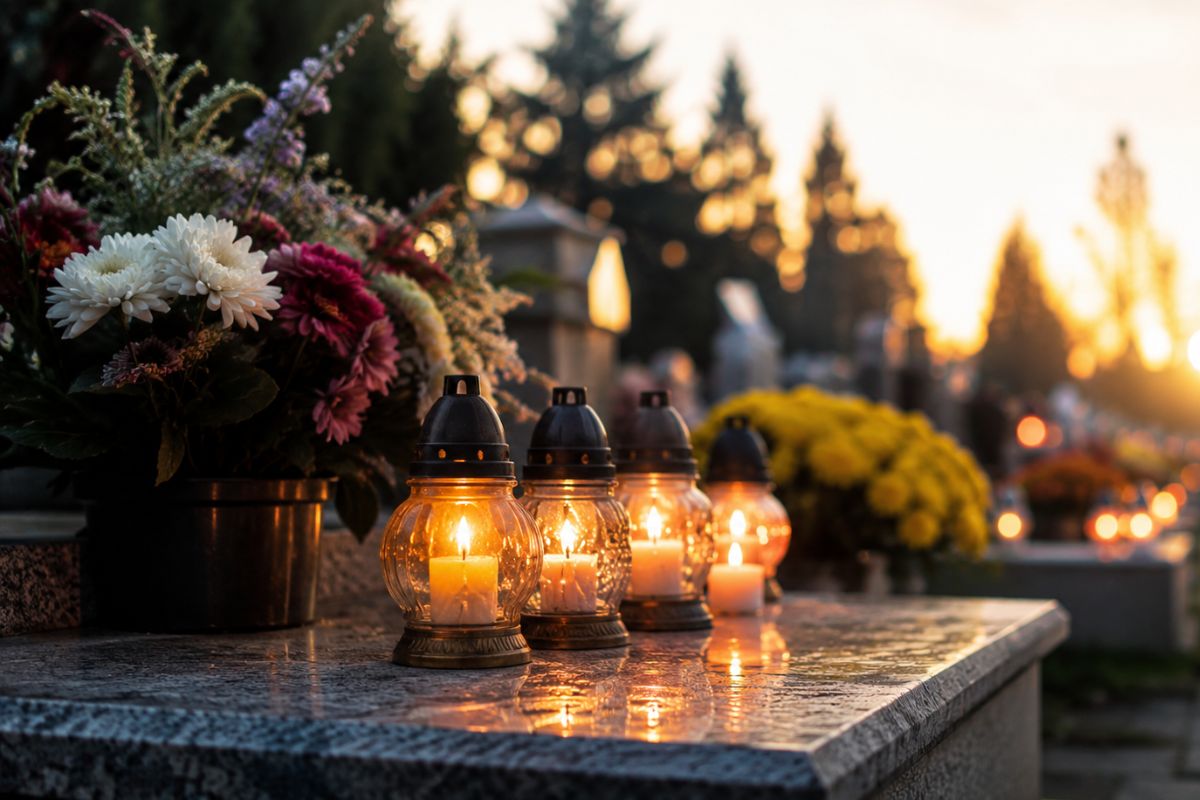
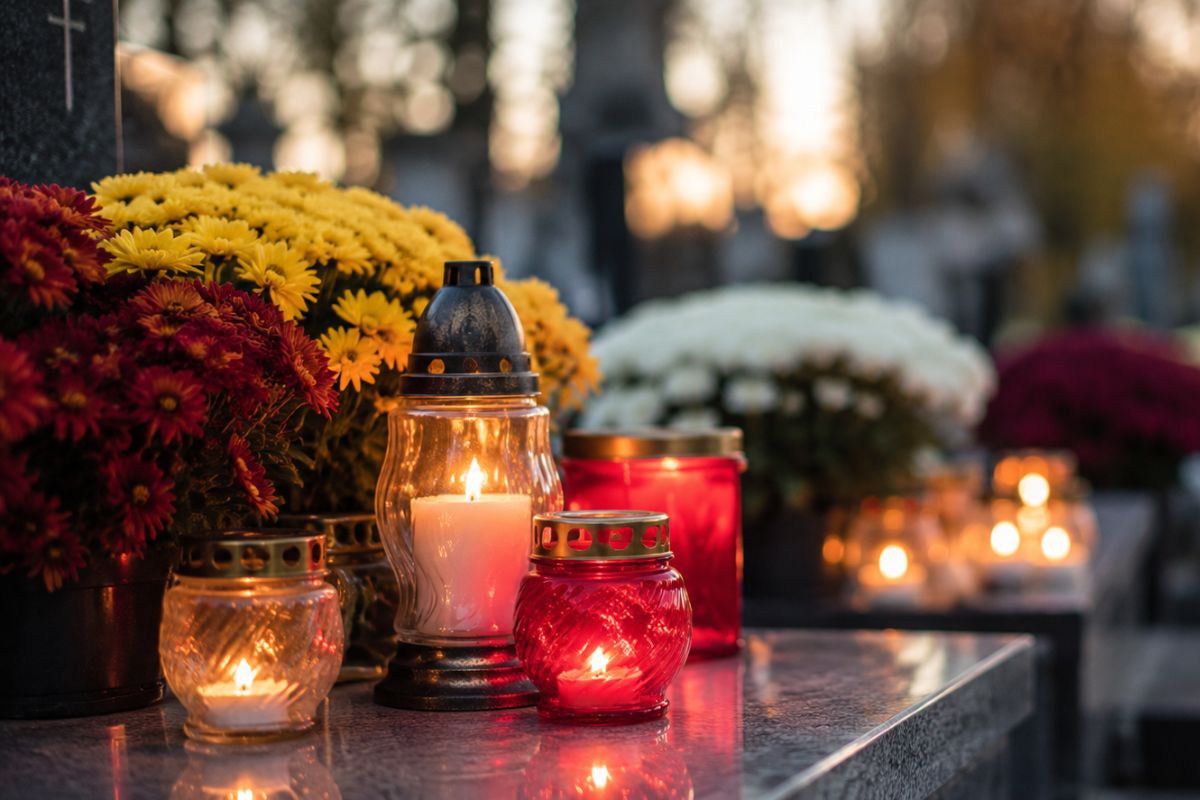
In France, the tradition of visiting cemeteries has become firmly established on November 1st, a public holiday, rather than the 2nd. Families converge on graves, arms laden with chrysanthemums, which have become the emblematic flower of All Saints' Day since 1919. After the first armistice commemoration, it was the only flower available in sufficient quantities to honor fallen soldiers. The custom took hold and has never been broken since.
Placing flowers, lighting candles, tending to graves: these simple gestures carry immense emotional weight. They silently convey that the presence of the departed loved one has not been erased by time. An act of love as much as an act of faith.
All Saints' Day with family: Meals, regional traditions, and soul cakes
All Saints' Day is also, profoundly, a family holiday. Beyond the cemetery, people gather for a meal, share memories, and tell children about ancestors they never knew. This is how memory stays alive.
Regional traditions enrich this dimension. In Corsica, people prepare Salvatias, small cakes offered in memory of the deceased. In Brittany, soul cakes were once distributed to the poor in exchange for prayers for the departed. These practices carry the same conviction: nourishing the living to appease the dead.
All Saints' Day also allows children to be simply and openly taught about the reality of death and the power of remembrance. An educational issue that many families naturally address around the table.
To remember: The cemetery visit on All Saints' Day is a French practice born out of convenience, since the true day of prayer for the deceased is November 2nd. The two dates together form a time dedicated to the memory of departed loved ones.
All Souls' Day Around the World: Same Love, Different Rituals
Día de los Muertos in Mexico: Celebration, colors, and communion with ancestors
From November 1st to 2nd, Mexico lights up. The Día de los Muertos, recognized by UNESCO as intangible cultural heritage of humanity, blends Catholic rites with millennia-old pre-Hispanic traditions. Ofrendas, altars laden with photos, cempasúchil flowers, food, and objects loved by the deceased, welcome returning souls for one night.
Faces are adorned with calaveras makeup. Processions cross cemeteries by torchlight. The atmosphere is festive, colorful, almost joyful: in Mexico, death is not feared, it is embraced. It is simply part of life.
Spain, Italy, Poland: Catholic Europe facing its deceased
In Spain, Día de todos los Santos gathers families around meals taken in the cemetery. The donuts "huesos de santos" (saints' bones) are enjoyed with family, and each region has its own nuances: in Cadiz, in Catalonia, traditions vary, but the tenderness remains the same.
In Italy, the feast of All Saints' Day rhymes with chrysanthemums and solemn masses. In Sicily, a belief holds that the deceased leave gifts under children's pillows on the night of November 1st to 2nd, as if death could still offer sweet surprises.
In Poland, the feast of Wszystkich Świętych has its roots in ancient Slavic beliefs. Bonfires once burned at crossroads to guide wandering souls. Today, lanterns cover graves with a trembling light, and the atmosphere, serious and collected, is strikingly beautiful.
Philippines: When families spend the night at the cemetery
In the Philippines, All Souls' Day, Araw ng mga Patay, results in several days off to allow everyone to reach their family cemetery, sometimes across the country. Families arrive the day before, clean the graves by hand, and light dozens of candles.
Then comes the night. People sleep on site, among the graves. The next day, music, dancing, festive meals: death is integrated into life in the most concrete way possible. Food, kakanin, is distributed to relatives and the poor. Everywhere in the world, honoring the dead is a universal act of love. This is perhaps the only certainty shared by all human cultures.
Halloween vs. All Saints' Day: Rivals or Sisters?
Halloween, celebrated on October 31st, draws its origins from the Celtic festival of Samhain, celebrated more than 3,000 years ago to honor ancestors who had passed into the afterlife. On this night of transition between summer and Celtic winter, the veil between worlds thinned. Souls returned, fires were lit.
The Catholic Church, in the 7th century, gradually Christianized these traditions, placing the feast of All Saints' Day the following day, November 1st. The night of the 31st then became the sacred eve, "All Hallows' Eve," from which Halloween is a contraction.
Reimported in popular and commercial form from the United States in the 1950s, Halloween is often perceived as a rival to All Saints' Day. The two holidays actually share the same fundamental relationship to death and ancestors. What separates them is the register: folkloric and commercial festivity on one hand, spiritual reflection on the other. Two different languages for the same question: what to do with those we loved and lost?
Keeping the Connection with Departed Loved Ones: Concrete and Lasting Ideas
Beyond chrysanthemums: Personalized gestures to honor memory
Visiting the cemetery remains essential. But the memory of a departed loved one does not end on November 2nd. It lives on in the anecdotes told to children, in the photos taken out on that day, in the objects kept. Sharing these stories maintains a living memory, much more lasting than flowers on a grave.
Creating a space of remembrance at home, a frame, a candle, a symbolic object, maintains this link between the dead and the living throughout the year. The communion of saints also reminds us that this link is a deep conviction, not just an annual ritual inscribed in the calendar.
Souvenir items and personalized tributes: Immortalizing the memory of a loved one
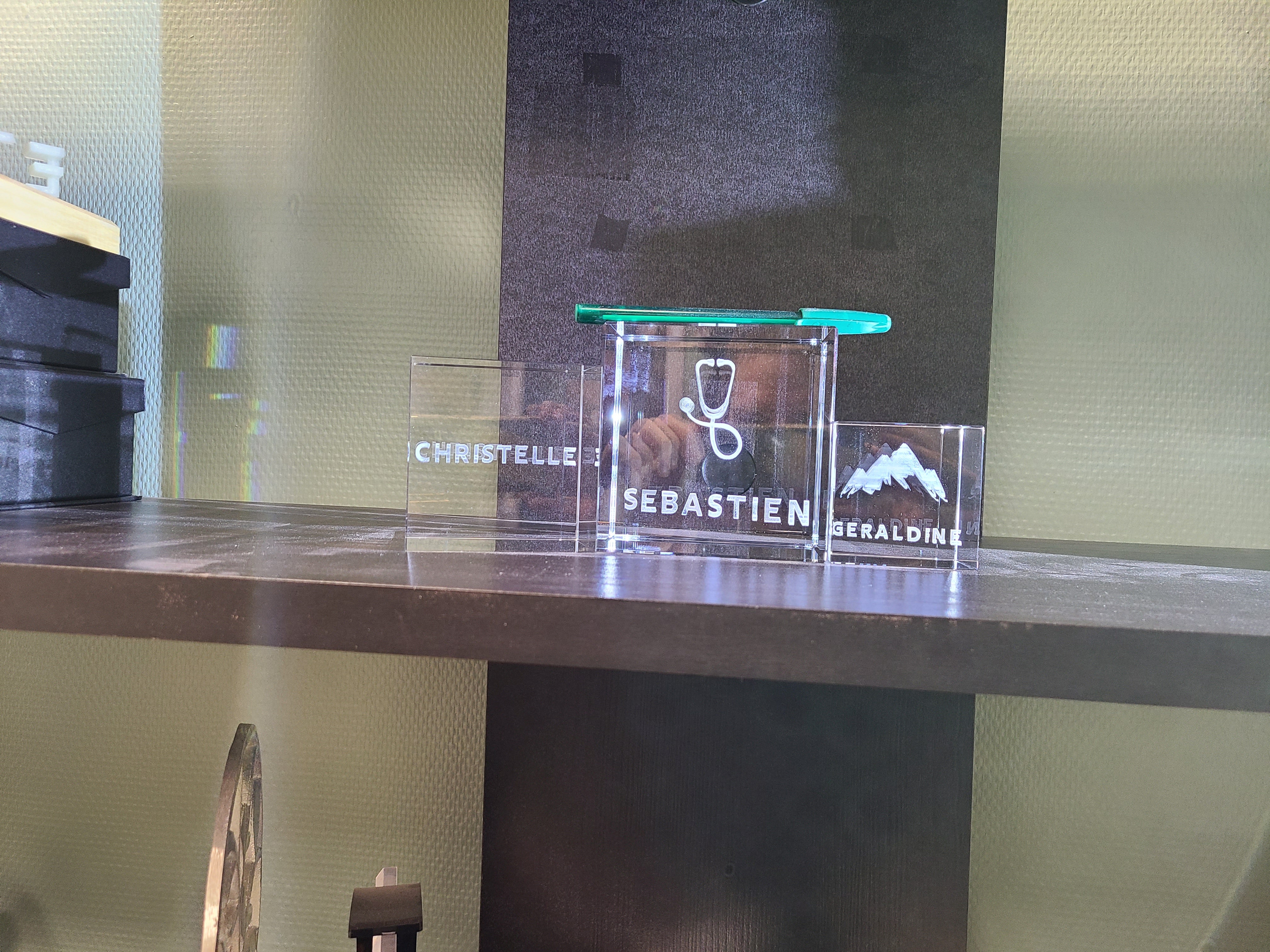
A personalized souvenir item can become one of the most delicate tributes. A digraph with a name engraved in the material, an artisanal creation designed from a memory, a unique shape that carries within it the trace of a presence: these objects speak where words fail.
Offering such a memory gift to a grieving family on All Saints' Day is a gesture that says we have not forgotten, that the departed person still matters, that they have left a visible imprint. Choosing a personalized tribute adapted to the deceased's personality, an everyday object transformed into a memorial or a unique artisanal creation, is to offer softness where pain often has the last word.
To remember: The most beautiful tributes are often the most personal. An object created from a first name, a date, or a shared memory becomes a treasure of remembrance, far beyond a simple gesture of circumstance. At Digraphe, each creation embodies the fusion of two presences, the luminous trace of an unbreakable bond.
Want to offer a unique and personalized tribute to those you love, present or departed? Discover Digraphe's artisanal creations, designed to keep the most precious bonds alive.
Conclusion: All Saints' Day, a Universal Encounter with Memory
All Saints' Day and All Souls' Day are two distinct periods, November 1st and 2nd, united by the same deep impulse: not to let those who came before us fall into oblivion. One celebrates the saints of the universal Church with joy and solemnity. The other invites reflection, intimate prayer, and visits to graves.
Beyond religious and cultural boundaries, whether it's the Mexican Día de los Muertos, Polish lanterns on graves, or Filipino families sleeping among the graves, every civilization has found its own way to honor its dead. And all say the same thing: love does not stop at death.
Making this period a time of transmission, sweetness, and active remembrance, far beyond a visit to the cemetery, is perhaps the most beautiful meaning we can give to All Saints' Day. As Paul-Jean Toulet wrote, with that tender melancholy so characteristic of him: "Death is sweet, for it makes us forget." Unless, precisely, we choose not to forget.
FAQ
What is the difference between All Saints' Day and All Souls' Day?
All Saints' Day, celebrated on November 1st, is a Catholic holiday dedicated to all the saints of the Church, known and unknown. All Souls' Day, or the Commemoration of All Faithful Departed, is held on November 2nd and is dedicated to prayer for departed loved ones. The two holidays are often confused in France because November 2nd is not a public holiday, and cemetery visits are made on November 1st for convenience.
Why is November 1st a public holiday in France?
November 1st is a public holiday in France due to the historical roots of All Saints' Day in French Catholic tradition. This religious solemnity has been recognized as an official day off, and it now coincides with school holidays, giving it a strong family and memorial dimension.
Why are chrysanthemums placed on All Saints' Day?
Chrysanthemums became the emblematic flower of All Saints' Day since 1919, during the first commemoration of the armistice. They were then the only plant available in large quantities in November to honor fallen soldiers. This tradition has continued, and the chrysanthemum is now inseparable from the cemetery ritual on All Saints' Day in France.
What is the origin of All Souls' Day?
The Commemoration of All Faithful Departed was instituted before the 10th century by the Catholic Church as an extension of All Saints' Day. It is part of an ancient tradition of prayer for the souls in purgatory. More broadly, the relationship of human societies to their dead dates back to much older practices: the Celtic festival of Samhain, celebrated more than 3,000 years ago, is one of the oldest known traces of a ritual honoring departed ancestors.
What is All Souls' Day in Mexico?
In Mexico, All Souls' Day is called Día de los Muertos and is celebrated from November 1st to 2nd. Recognized by UNESCO as intangible cultural heritage of humanity, it blends Catholic rites with pre-Hispanic traditions. Families erect ofrendas, altars laden with photos and offerings, and welcome returning souls for one night in a festive and colorful atmosphere, very different from European solemnity.
Do Halloween and All Saints' Day have the same meaning?
No, although they share a distant common origin. Halloween has its roots in the Celtic festival Samhain and is celebrated on October 31st in a mainly festive and commercial form. All Saints' Day, on November 1st, is a Catholic religious solemnity dedicated to saints. They converge in their connection to the boundary between the worlds of the living and the dead, but their customs and intentions are radically different.
How to honor the memory of a deceased loved one on All Saints' Day?
Visiting the cemetery and laying flowers remain essential gestures. Honoring a deceased loved one can take many other forms: sharing photos and anecdotes with family, passing on their memory to children, creating a remembrance space at home, or offering a personalized memorial item to loved ones. These gestures keep the connection alive throughout the year, far beyond All Saints' Day alone.