Four major categories of gifts stand out to accompany mourning: commemorative items (engraved frame, jewelry, candle), comforting everyday gestures (throw, book, herbal tea), practical help (meals, errands, presence), and personalized creations designed to last. The choice depends on the bond you share with the grieving person, when you act, and what they need on that specific day. This article details each category, the right times to act, and the gentle mistakes we almost all make out of love.
Gift ideas to accompany mourning: what should you really choose?
Someone you love has just lost a dear one. You are looking for a gesture. Words are stuck somewhere between your throat and the blank page, and online shops show you dozens of options that all seem off-target. It is exactly this feeling of being lost, rushed, and moved that makes choosing a gift to accompany mourning so difficult.
Yet, a simple truth runs through all trials: it is not the value of the object that touches, but the presence it embodies. A mourning gift does not have to fix the unfixable. It says "I am here" when sentences fade away.
To know which direction to take, here are the four major categories of gifts one can consider during a bereavement.
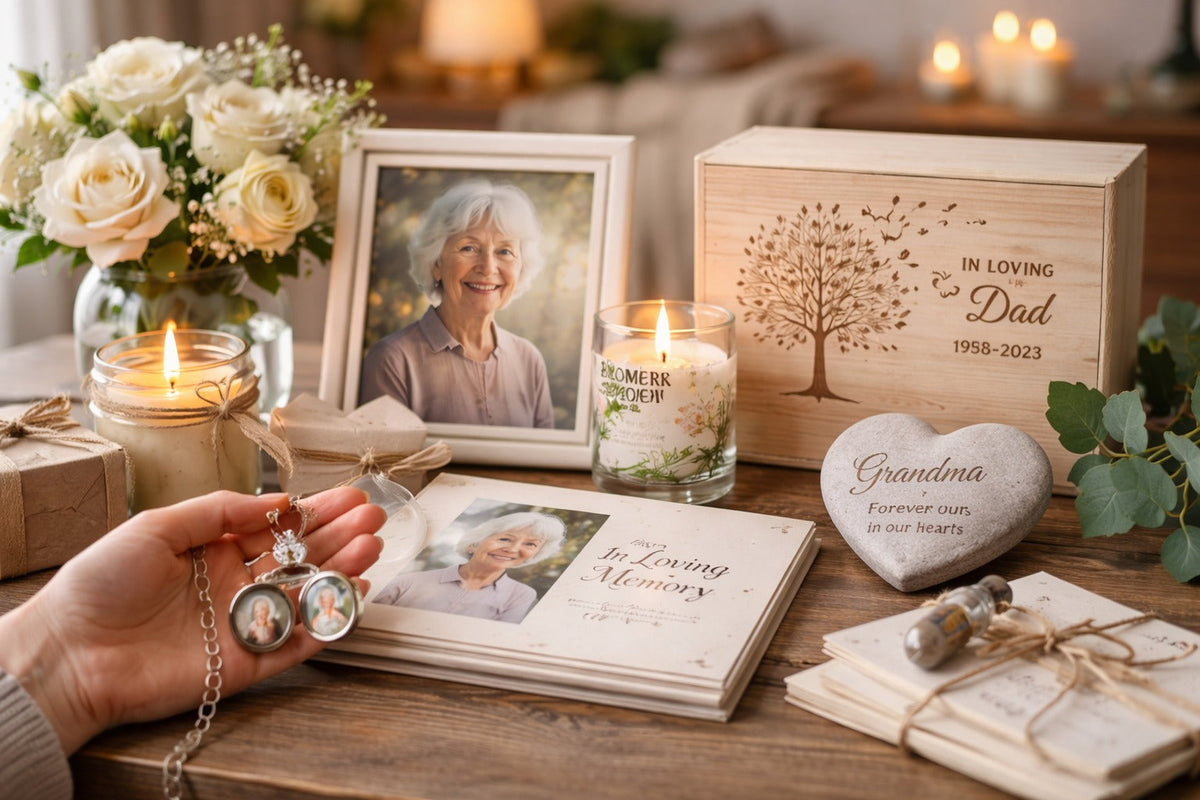
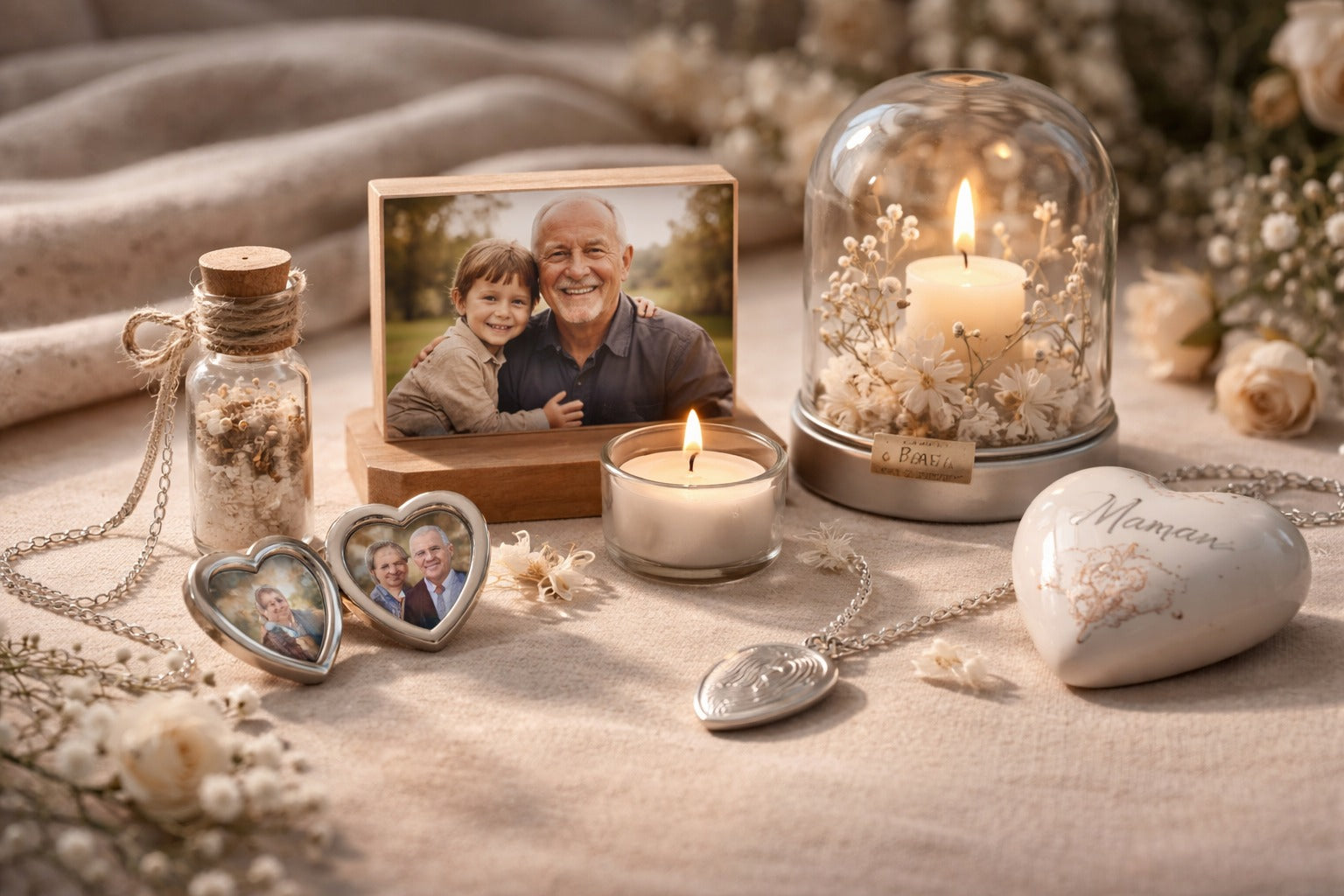
- Symbolic and commemorative gifts: engraved objects, keepsake candles, personalized photo frames, commemorative jewelry. They keep the memory of a lost person alive and support the grieving person over time.
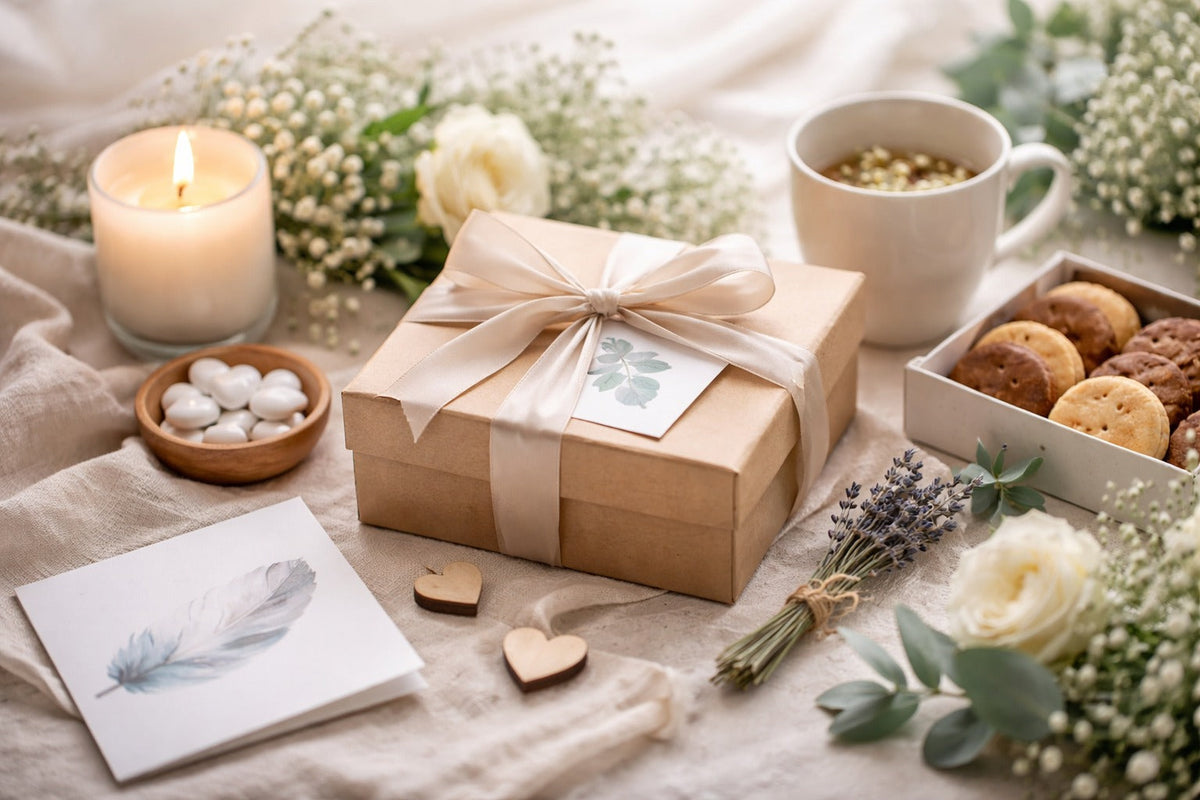
- Comforting everyday gifts: soft throw, wellness set, herbal tea, tactfully chosen book like Vivre le deuil au jour le jour by Christophe Fauré or Traverser le deuil by Sylvie Tenenbaum. These gentle attentions invite the person to breathe, without pressure.
- Practical help: prepared meals kept in aluminum containers for a grieving family, groceries delivered, offered childcare. Sometimes, the most benevolent gesture is also the most practical one.
- Personalized and lasting gifts: a unique object made with care, engraved with a first name or a date, designed to endure through time rather than just fill it.
None of these categories is hierarchically superior to the others. Everything depends on the bond you share with the grieving person, how they experience grief, and what they need at the precise moment you act.
Should you wait for the funeral? Act within the first few hours? Return several weeks later, when condolences have faded and loneliness sets in? All three moments deserve a gesture. And often, it is the third one that we forget.
Grief does not follow a calendar. A gift offered a month after a passing sometimes touches much more than a basket of flowers sent on the day of the funeral. What matters is the consistency of the presence, not the grandness of the gesture.
Supporting a loved one in mourning with an object chosen for them, and only for them, is already telling them they are not alone. The next section guides you toward gifts that honor the memory of the deceased with the delicacy this moment requires.
Symbolic and commemorative gifts: honoring the memory of the deceased
Some gifts do not seek to console. They choose something else: to keep a trace, to maintain a bond, to make visible what grief threatens to erase. These are objects you place on a windowsill, that you touch with your gaze every morning, that gently reach out.
Among the most chosen attentions, the keepsake photo frame remains a safe bet, especially when engraved with a first name, a date, or a sober phrase. It captures a moment without freezing it in sadness. The memory journal stems from the same impulse: to invite the grieving person to write, to summon images, to put words where they struggle to come. It is an intimate space, never imposed.
Commemorative jewelry, such as a discreet pendant or an engraved bracelet, embodies this bond differently. You carry it on you. It becomes a worn, silent presence that you feel against your skin in the moments when the absence weighs the most.
Other objects play with light and softness. The commemorative candle transforms an ordinary gesture—lighting a flame—into a ritual of memory. The eternal rose, stabilized to last for months, says something that fresh flowers cannot: here, beauty does not fade. These are tribute gifts that pass through time silently.
- Engraved object: first name, date, or short quote on wood, metal, or stone
- Keepsake photo frame: sober, with or without inscription
- Memory journal: blank pages for writing, drawing, pasting
- Commemorative jewelry: pendant, bracelet, ring engraved with an initial
- Keepsake candle: scented or engraved, to light during moments of reflection
- Eternal rose: stabilized natural flower, symbol of lasting love
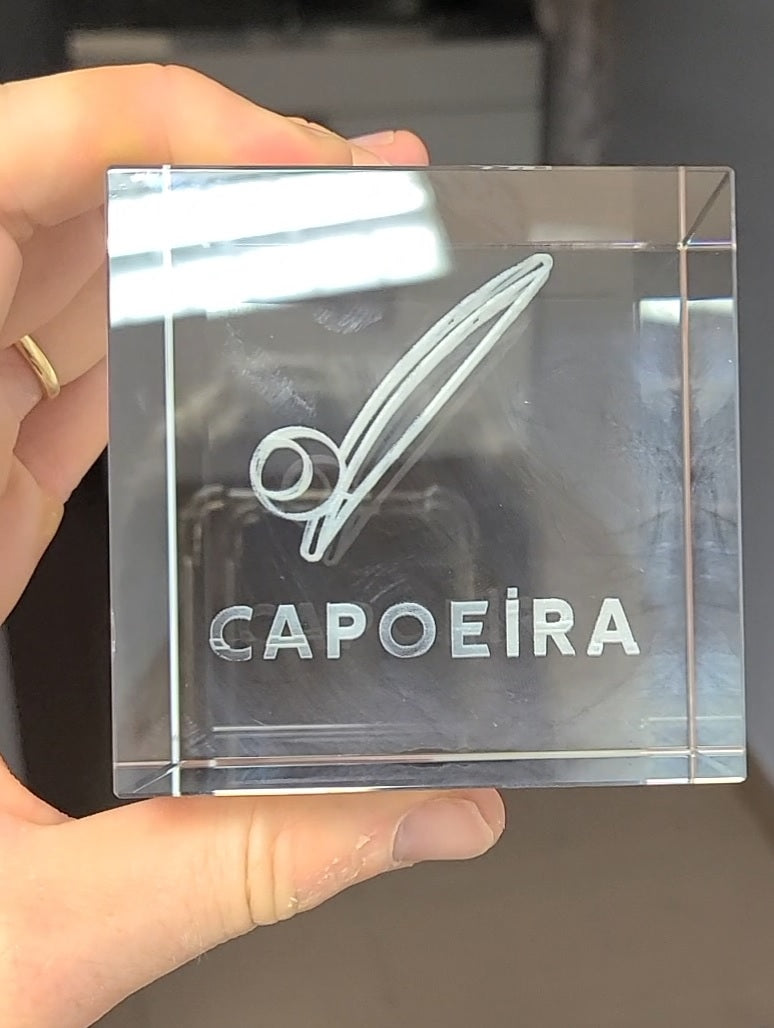
And then there is the crystalline digraph. An object that is like no other.
It is a symbolic optical illusion engraved in crystal: two names merge into a single object, made in France. Look from the front: one name emerges. Move slightly: the other appears. Two presences in one material, depending on the angle, depending on the light.
The crystalline digraph bears the first names of the grieving person and the deceased. It is not a portrait. It is not a photo. It is something that words cannot do: make a bond visible. Show it, without explaining it.
The crystal captures ambient light, plays with reflections, and changes according to the time of day. This personalized object freezes nothing in the immobility of memory. It moves. It lives. It reminds us that two names, even separated by absence, remain inscribed in the same space.
This is what the most fitting commemorative gifts seek to say: not that everything will be better, but that the bond, itself, remains.
Practical and comforting gestures: being there when it counts
After a death, life does not stop. It continues, heavy, with errands to run, meals to prepare, and administrative tasks that pile up while energy has vanished. It is in this burdened daily life that the simplest attentions become the most necessary.
A prepared meal, for example. No need to overdo it. Aluminum containers filled with homemade dishes, ready to freeze, represent practical help that the grieving family will truly feel, three nights in a row, when the idea of cooking seems insurmountable. Food says something that words cannot always express: I thought of you down to the details.
In the same vein, a package of groceries or everyday items—coffee, herbal teas, paper towels, soap—brings relief without ever intruding. These are gentle attentions that come through the door silently, without demanding recognition. You leave them. You leave. And the person knows.
For those who do not know what to choose, a gift card remains a fair and respectful option. It leaves the grieving family the freedom to use it when the need arises: a grocery delivery, a self-care session, a book. This freedom, during a period of mourning, is worth a lot.
The wellness set also deserves its place in this reflection. Not as a luxury, but as a discreet reminder that the body needs to be taken care of too. A lotion, a candle, soft socks, a bath soak. These objects erase nothing, but they open a parenthesis. A moment for oneself, brief, without guilt.
And then, there is what we cannot slide into any box. Presence. A phone call made three weeks after the funeral, when everyone has resumed their normal lives and the grieving person finds themselves alone with their silence. A visit without warning, just with coffee and time. That emotional support, discreet and persistent, is often the one we remember longest.
These gestures all have something in common: they transcend time. Not just the first days, which are the most visible. But the weeks after, when the house becomes silent again and the mourning period truly sets in. The strongest words of comfort are not always spoken; sometimes, they take the form of a container of soup left on the doorstep, or a message sent on a Tuesday morning, for no particular reason.
Being there. Lastingly. That is the gift.
Flowers, plants, and donations: traditional gestures revisited
Flowers come first. Almost by reflex. This is no coincidence: offering flowers as condolences transcends cultures and eras because the gesture speaks for itself, without requiring words. In France, the chrysanthemum remains the mourning flower par excellence, brought to cemeteries for generations. The white rose evokes respect and tenderness. Choosing according to the family, their origins, and their sensibilities is already an act of attention.
But cut flowers fade. And sometimes, that is precisely what you do not want to bring to someone who is already living through a loss. A green plant changes the situation: a bonsai, an orchid, a ficus. It grows, it lasts, it discreetly reminds us that something continues. This is not consolation. It is a vegetative, silent presence that lasts through the weeks where bouquets would not have survived.
The condolence card deserves to be rehabilitated. It is often relegated to a formality, scribbled in haste. Yet, a sincere message—a few lines that name the deceased, that recount a shared anecdote, that do not seek to relativize the loss—is sometimes what stays longest in the grieving person's memory. Naming someone who is no longer there is already a tribute.
As for charitable alternatives, a donation in the name of the deceased is becoming increasingly meaningful. The Fondation de France, among other organizations, manages this type of process. Choosing a cause that was dear to them is to extend who they were. Funeral collections, sometimes organized beforehand or during the funeral, follow the same logic: transforming loss into a gesture toward the world.
There remains a question that few people truly ask: when to offer?
- At the funeral: flowers are expected, as is a card. It is the time for the first gesture.
- In the weeks that follow: this is often when silence sets in, and the entourage resumes their lives. A plant, a word, a practical attention arrive like a buoy.
- Several months later: the anniversary of the death, a date that returned every year. This moment is often the loneliest, and a gift for a grieving friend that arrives then says something powerful: you have not forgotten.
Grief does not end the day after the funeral. It lasts, it returns, it surprises. The most expected gestures are those of the first day; the strongest are often those of the fortieth, or the hundredth. Supporting over time means knowing that grief has no expiration date, and that condolences are not a box to check but an attention that crosses time.
How to choose the right gift according to the relationship and the timing?
What gift should you bring to a grieving person when you don't know what to say? The question comes up often, and it deserves better than a canned answer. The relationship, the type of loss, the timing: three simple markers are enough to guide the right gesture.
Adapting the gift to the relationship
Emotional closeness changes everything. With a close friend, a gift can be more intimate: a personalized object, a shared memory, something that bears a name or a date. With a colleague or neighbor you know less, stick to the register of discreet support: a sincere card, flowers, a prepared meal. The rule is not written, but it can be summed up in one sentence: the more distant the relationship, the better it is for the gesture to remain sober.
For a family going through a collective loss, practical attentions often touch more than symbols. Containers of cooked meals, groceries dropped off without warning, extra hands available to watch the children: these concrete gestures say "I am here" without cluttering the grief.
Taking the type of loss into account
Losing a parent, a spouse, a child, or a pet does not generate the same needs. Losing a child or a spouse is losing a part of oneself. In these cases, a personalized gift bearing the name of the deceased takes on a special dimension: it acknowledges the bond, without trying to replace it. Losing a pet, long minimized, is real pain. A symbolic object, a photo frame, a gentle attention: the principle remains identical.
Choosing the right timing
Timing counts as much as the object. Just after the death, practical gestures take precedence: meals, presence, logistics. A month later, when the entourage has dispersed and loneliness truly sets in, a gift with meaning often lands better. On the anniversary of the loss, a symbolic object regains all its strength.
- In the first days: practical help, meals, physical presence.
- A few weeks later: book on mourning, wellness set, gentle attention.
- On the anniversary or a symbolic date: unique and symbolic gift, personalized memory object.
A benevolent grid of reflection
Before choosing, three questions suffice. Do I know this person well? Is this the right time for an object or a practical gesture? Does this gift speak of them, or of me?
The most beautiful gift remains the one that says "you are not alone." Long after conversations have ceased, a personalized object continues to carry that message. The crystalline digraph, with its two names merging depending on the angle of view, embodies exactly that: the departed person remains visible, present, alive in the material. To support a grieving person with a gesture that transcends time, discover Digraphe creations.
FAQ
What gift should I choose to accompany mourning?
A symbolic object that keeps the memory of the deceased alive, a comforting everyday gesture, practical help: everything depends on the bond and the timing. What truly touches is the presence that the gift embodies, not its value. A personalized object, designed for a specific person, often says better than words what one cannot formulate.
When should I bring a gift to a grieving person?
All three moments count: before the funeral, on the day of the funeral, and several weeks later, when condolences have faded. This last time is often the most forgotten, yet the most necessary. Grief does not follow a calendar: a late gesture sometimes touches much more than a flower sent on the first day.
How can I concretely support someone in mourning?
Beyond symbolic gifts, practical attentions count immensely: a prepared meal, groceries, regular presence. Support that lasts, even if modest, is worth more than one grand gesture. Returning, checking in a month later, offering help when others have already forgotten, is often what makes the difference.
Are there gifts to honor the memory of the deceased?
Yes, and they are often the ones that traverse time the best. An object engraved with a name or date, a personalized photo frame, commemorative jewelry: these gifts do not seek to erase the pain. They choose something else: to keep a visible trace, maintain a bond, make present what grief threatens to erase.
Is a personalized gift appropriate during mourning?
Yes, provided it is designed for the person, not for the occasion. A unique object, made with care, engraved with a shared memory, says that you really thought about them. It is this singular attention that distinguishes it from a conventional gesture. Mourning is an intimate experience: the gift that responds to it must be as well.
Which gift to accompany mourning: what the object says when words fade away
A gift chosen with care fixes nothing. It says something else: you matter, I am here, I do not forget. Whatever your choice to accompany mourning, it is the sincerity of the gesture that comes through. An object engraved with a name, a flame lit together, a plate left in front of the door, every attention carries the same intention. What we know less often is that mourning lasts long after the funeral. Returning, several weeks or months later, with an object chosen just for that person, is perhaps the rarest, and most necessary, gesture.