Grief is a deeply personal experience, often marked by a feeling of emptiness and disorientation. When a loved one passes away, sometimes only intangible memories remain: a voice, a laugh, a presence that continues to resonate in the mind. For many, possessing a keepsake allows them to materialize this invisible connection, to give tangible form to the absence, and to anchor the memory in their daily lives.
Giving a memorial gift after a death is never a trivial gesture. It is, above all, a sign of support, a silent gesture that says "I'm here" without resorting to clumsy words. Unlike a traditional gift, a memorial item doesn't seek to distract or console immediately; it accompanies the extended period of mourning. It becomes an emotional anchor, a point of reference to which the bereaved can return when the loss becomes more intense.
A memorial object can also play a vital role in the healing process. It helps to ritualize loss, acknowledge the place the deceased held, and preserve their memory without remaining trapped in grief. Whether it's a discreet piece of jewelry worn daily, a decorative object placed in a living space, or a living tribute like a plant or a tree, each choice tells a unique story.
In this article, we offer a comprehensive and thoughtful selection of memorial gifts for those grieving a loss. You'll discover ideas for customizable keepsakes, suitable for different types of loss: a parent, a spouse, a close friend, or even a pet. Our aim is to guide you toward respectful and meaningful gifts that resonate with the feelings of the bereaved. More than just a list of ideas, this guide is intended to help you choose a lasting, sincere, and deeply human tribute.
Why offer a keepsake after a death?
Giving a keepsake after a death primarily addresses an emotional need. For the bereaved, receiving a memorial gift can be seen as an acknowledgment of their grief and the importance of the bond they shared with the deceased. This thoughtful gesture helps to alleviate the isolation often felt during mourning, demonstrating that the loss is understood and respected.
A memorial object also helps to ritualize remembrance. Grief is not a one-time event, but a gradual process. Having an object dedicated to the memory of the deceased helps to structure this journey. Lighting a candle, touching a piece of jewelry, leafing through a photo album, or pausing in quiet reflection before a symbolic object becomes a personal, soothing, and reassuring ritual.
Personalization plays a fundamental role here. A personalized object is never generic: it carries a story, a name, a date, a quote, or an image that refers to a unique connection. This singularity transforms the object into a symbolic extension of the shared experience. Whether discreet or more visible, the keepsake then becomes a repository of memory, but also an intimate space where the bereaved can continue to engage with the absence.
The best commemorative gifts to give
Personalized commemorative jewelry
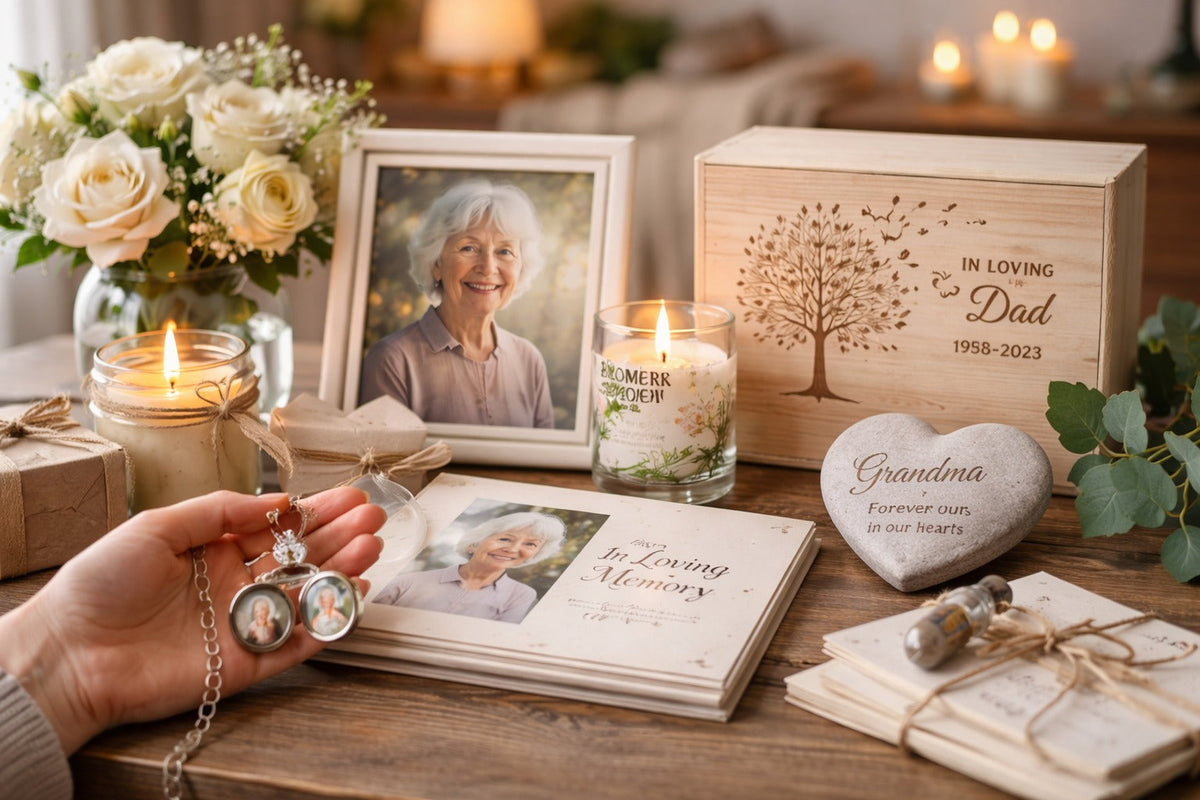
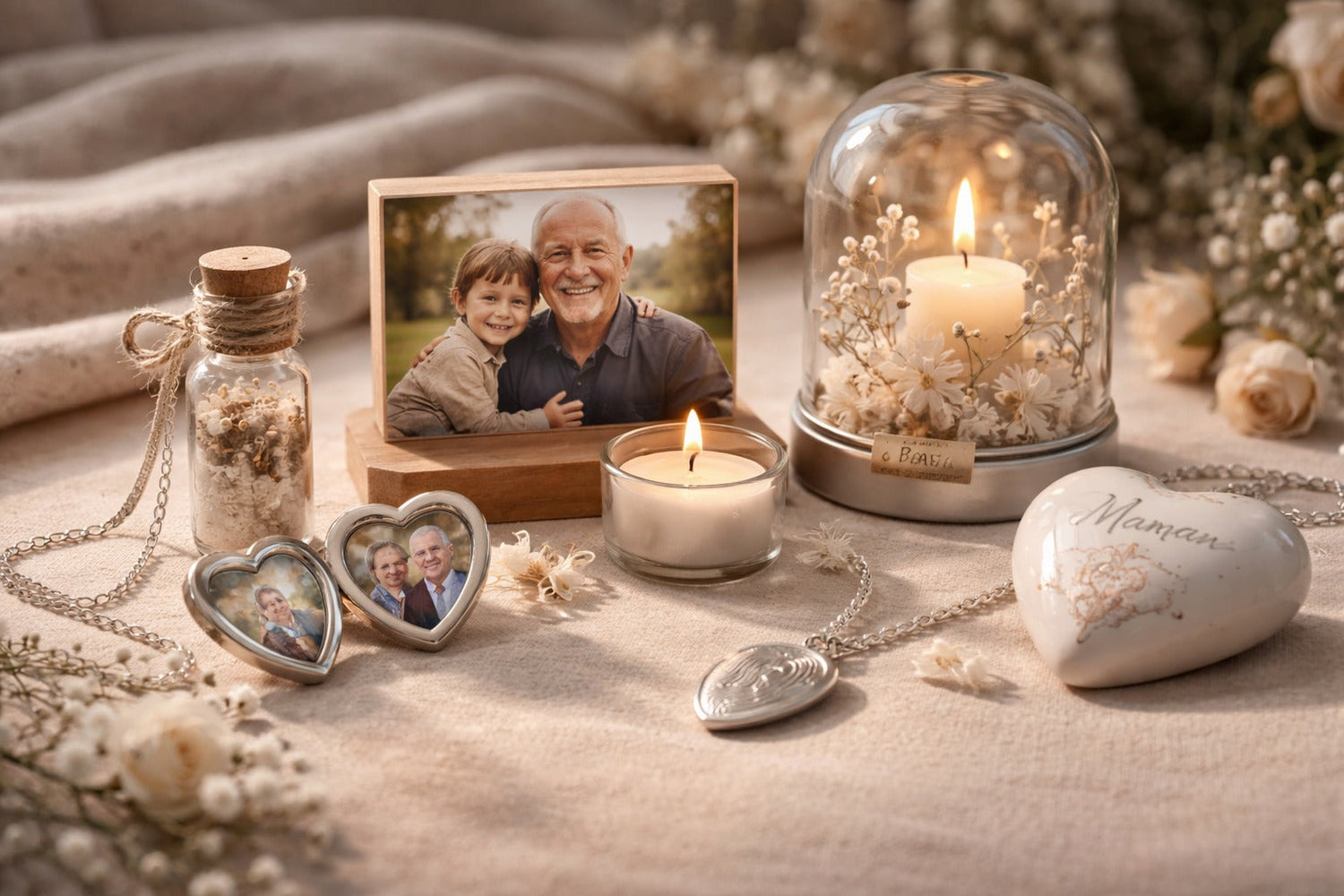
Memorial jewelry is among the most cherished keepsakes after a death. Discreet yet meaningful, it allows you to symbolically keep your loved one close every day. A pendant can hold a miniature photo, a fingerprint, or simply a symbol chosen to represent the deceased.
Engraved bracelets are also a powerful emotional choice. A name, a significant date, or a short quote can be inscribed on them, transforming the piece of jewelry into an intimate message. Wearing the bracelet daily then becomes a silent ritual, a constant reminder of the bond that still unites you.
A photo locket, in porcelain or glass, offers a more visual alternative. It can be worn or kept in a case, according to personal preference. Some pieces also include a discreet capsule for storing a tiny amount of ashes or a symbolic keepsake, such as pet hair. This type of jewelry, so personal, is for those seeking a deeply intimate tribute.
Decorative items for an everyday memory
Memorial decorative objects allow us to incorporate remembrance into our living spaces. A memorial candle, engraved with a message or chosen for its evocative fragrance, can be lit during moments of reflection. It symbolizes the light and continuity of memory.
Wooden photo frames or photo blocks offer a gentle and soothing visual presence. Placed on a shelf or desk, they evoke a happy moment shared with the deceased without being intrusive. These decorative objects can be personalized to enhance their emotional significance.
Other objects, such as wind chimes or memorial lanterns, naturally find their place on a balcony or terrace. The sound of the chimes or the light of the lantern then become symbolic signs of presence, particularly comforting.
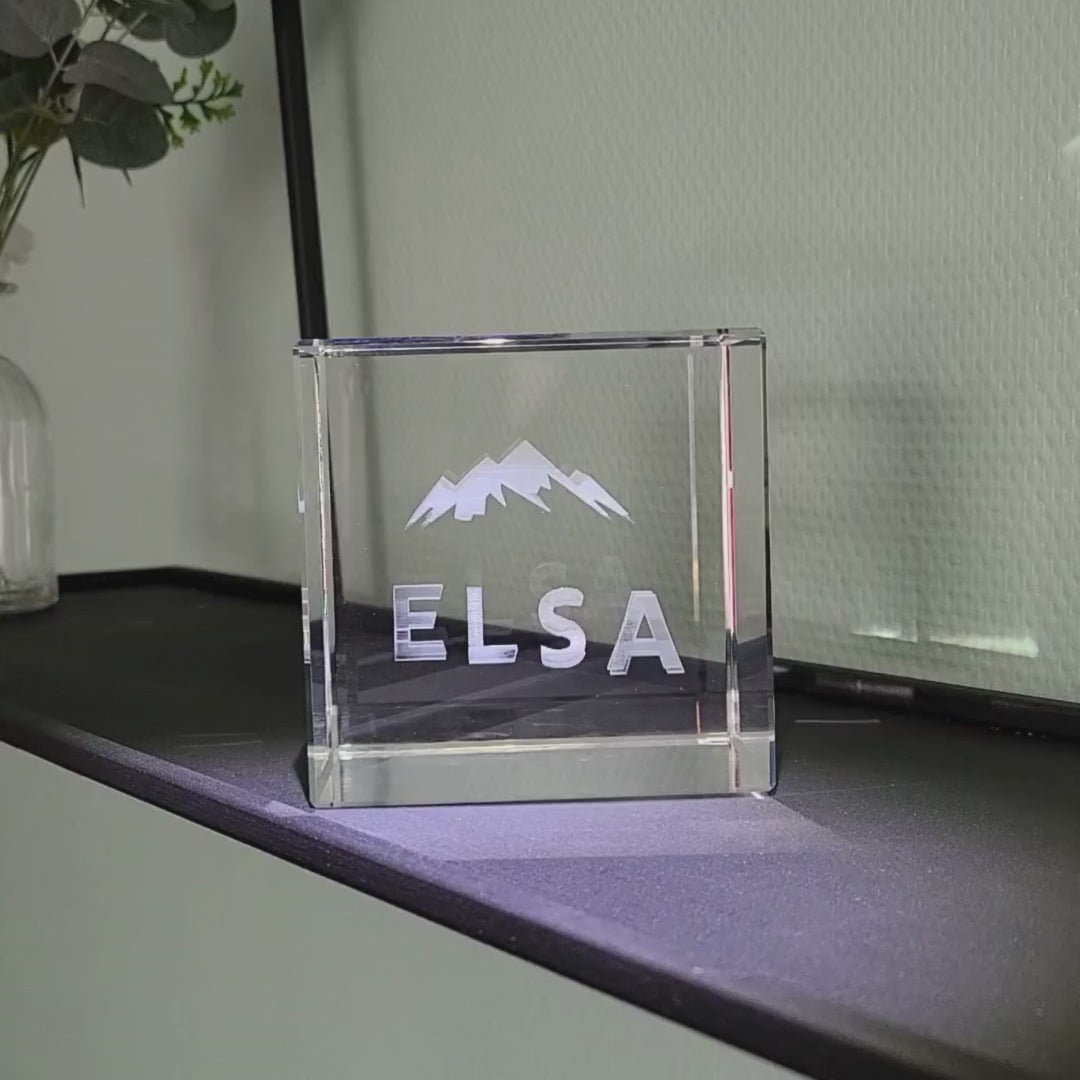
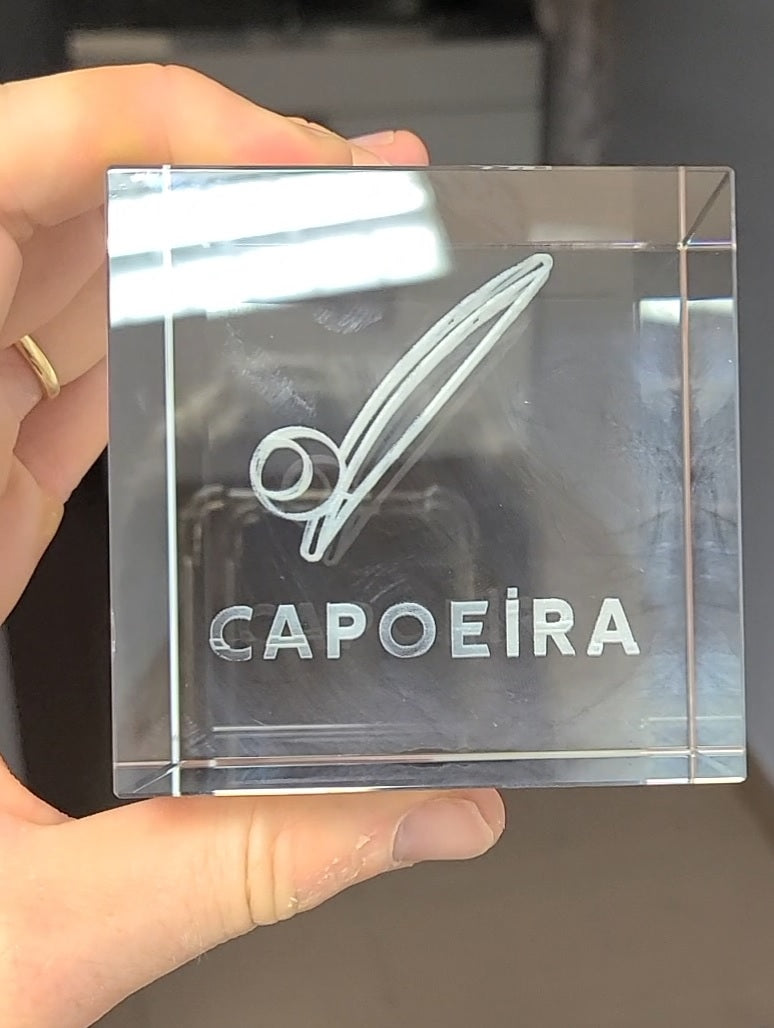
The digraph and the crystalline digraph also embody this meaningful decorative approach. The digraph blends two first names in a delicate optical illusion: depending on the angle of view, one appears, then the other, like a silent dialogue between the departed and the one who continues to love them. Carefully crafted in our workshop in France and customizable with laser engraving, it becomes a discreet yet deeply symbolic keepsake. Its crystalline version, even more luminous, captures light and diffuses it in subtle reflections, giving the impression that the memory permeates the material. Placed on a shelf or desk, the digraph doesn't freeze the absence: it keeps the connection alive, gently, with each glance.
Comforting textile items
Textiles play a vital role in providing emotional comfort. A personalized throw, adorned with a photo or a quote, invites you to cozy up and offers a feeling of security. It can be used during moments of emotional exhaustion, often common during bereavement.
A memorial cushion made from the deceased's clothing is a particularly powerful symbolic idea. The fabric, imbued with sensory memories, allows for a tangible connection to the departed.
Weighted blankets, meanwhile, are known for their calming effects on sleep and anxiety. While not explicitly commemorative, they constitute a gift of indirect support, promoting the overall well-being of the bereaved.
Objects of writing and memory
Writing is often a powerful way to cope with grief. A photo album or a memory book to be filled in collectively allows for the gathering of testimonies, anecdotes and images, thus creating a shared memory.
A memory book offers a more intimate space, conducive to personal expression. Writing letters, thoughts, or memories helps to put words to the absence and transform the pain into a peaceful memory.
Keeping handwritten letters in a personalized box is also a way to preserve the words and emotions, while offering them a respectful setting.
Ideas for a living and symbolic tribute
Planting to remember
Planting a tree or a flower in memory of a loved one is a deeply symbolic gesture. The tree grows, evolves, and lives through the seasons, embodying the continuity of life despite loss. Certain flowers, chosen for their symbolism, also allow for a delicate expression of remembrance.
Biodegradable urns containing seeds are part of this approach to living tribute. They transform ashes into a source of renewal, offering a soothing vision of remembrance.
Personalized garden or memory corner
Creating a memorial corner in a garden or inside the house provides a dedicated space for reflection. A mini Zen garden or a keepsake terrarium invites contemplation and tranquility.
An engraved stone, placed in a garden or flower pot, can bear a first name or a quote, becoming a discreet but meaningful landmark.
Donation in memory of the deceased
Making a donation in memory of the deceased to a cause they cared about is another way to honor their memory. This act of solidarity extends the values of the departed and gives them tangible meaning.
A commemorative certificate, kept or framed, makes it possible to materialize this tribute and to recall the commitment made in his memory.
Gift ideas for a deceased child or pet
The loss of a child or a pet requires a special approach. Children's books that address grief with simple words and gentle illustrations can help children understand and express their emotions.
For a pet that has passed away, an illustrated portrait or a keepsake plush toy can provide a comforting symbolic presence. Personalized medallions, treasure boxes, or illustrated cards also offer suitable ways to cope with these often deeply emotional losses.
How to choose the right souvenir gift?
The choice of a memorial gift depends primarily on the relationship with the deceased. A very personal item will be more suitable for a close family member, while a more discreet gift will be preferable for a colleague or acquaintance.
It is also essential to consider the sensitivity of the bereaved person. Some people find comfort in spiritual symbols, while others prefer simple, unsentimental objects.
Finally, timing plays a key role. Offering a gift too immediately after a death can be poorly received. Taking the time to observe and respect each person's emotional pace is essential.
Where can I find or create a personalized keepsake?
Personalized memorial objects can be designed in specialist shops offering bespoke creations, or by artisans and artists capable of translating a personal story into a unique object.
Creative workshops and DIY projects are also an interesting alternative. Creating a keepsake yourself, such as an album or an embroidered item, adds an extra emotional dimension to the gift.
FAQ – Keepsake gift after a death
What gift should I give to someone who is grieving?
A personalized piece of jewelry, a memorial candle, a keepsake box, or a memorial plant are respectful and comforting options.
Are there any memorial items for deceased animals?
Yes, there are pendants with imprints, illustrated portraits, decorative objects or plant tributes dedicated to extinct animals.
How to pay tribute to a deceased person in an original way?
Creating a unique object, organizing a personal ritual or making a symbolic donation allows you to express a sincere and lasting tribute.
What memories should be kept after a death?
Photos, letters, personal items, commemorative jewelry or dedicated plants are all suitable ways to remember.