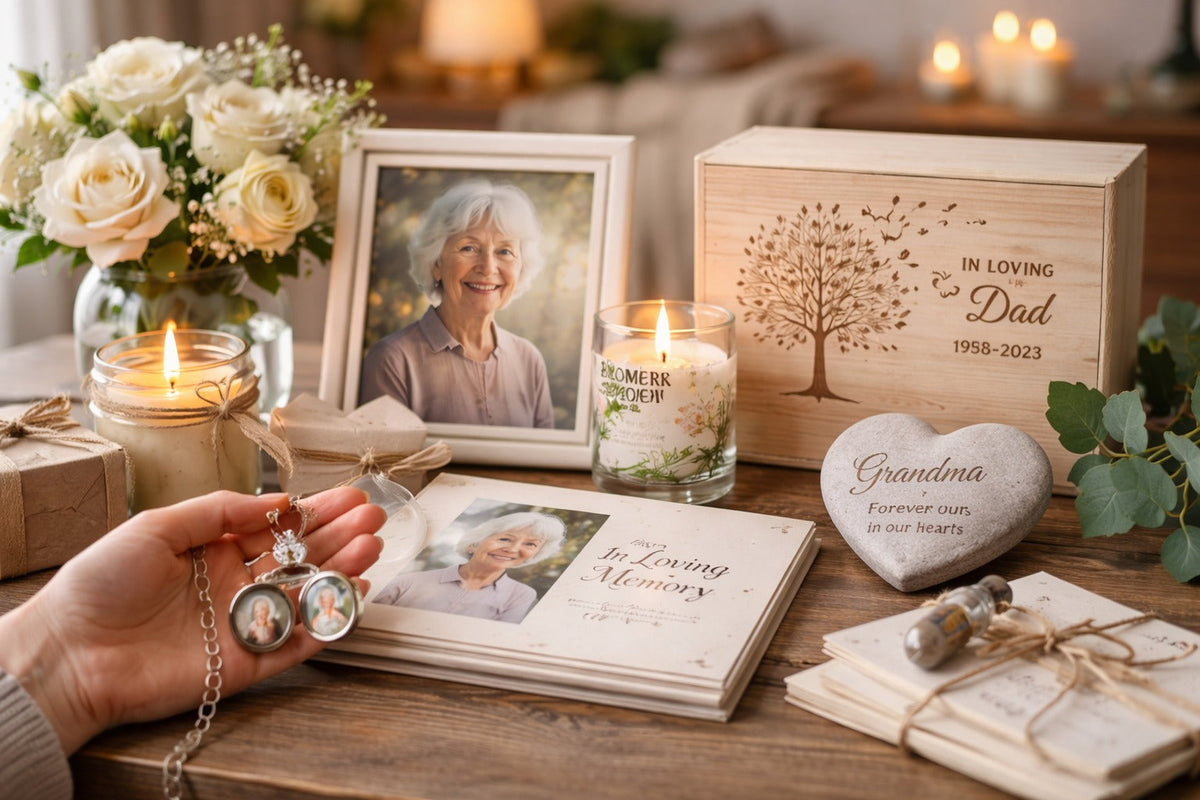
When a friend is going through the ordeal of grief, it's often difficult to find the right words. Faced with the loss of a loved one, silence sometimes becomes necessary, not out of indifference, but out of respect, modesty, or fear of doing the wrong thing. Yet, even when words seem inadequate, gestures can speak with an infinitely gentler and more comforting power.
Giving a gift to a grieving friend isn't meant to erase the pain or pretend to soothe deep suffering. It's primarily a sign of support, a discreet message that says, "I'm here, I'm thinking of you, you're not alone." In these fragile moments, a carefully chosen gesture can become a true source of emotional support, a reassuring anchor in a life turned upside down.
Grief is an intimate experience, unique to each person. Some will need solitude and silence, others gentleness, warmth, or a safe space to process their emotions. The gifts presented in this article have been chosen with this in mind: to respect your friend's pace, to offer comfort without ever intrusive, and to support her with kindness on this difficult journey.
Whether it's a symbolic object, a practical gesture, or a gift intended to offer a moment of respite, each idea stems from a specific intention. A memorial candle to honor a memory, a discreet piece of jewelry to maintain a connection, a prepared meal to lighten a difficult day. These simple yet sincere gestures all have one thing in common: they speak the language of the heart.
In the following pages, you will discover why giving a gift after a death can be meaningful, followed by a selection of twenty thoughtful gestures, divided into five main categories. The aim is not to offer a solution to grief, but to suggest ways to support your friend with sensitivity, compassion, and respect.
Why give a gift after a death?
In the face of loss, words often seem inadequate. We fear clumsily reopening old wounds or trivializing an ordeal that shatters an entire life. In this context, symbolic gestures take on particular importance. They allow us to express what words cannot always articulate.
Giving a gift after a death is, above all, acknowledging the reality of the other person's grief. It signifies that you are aware of what has happened, that you are not turning a blind eye to their suffering. This gesture, however simple, breaks the feeling of isolation that many bereaved people experience.
A gift of condolence also acts as a discreet and constant presence. Unlike a conversation that ends or a one-off visit, a tangible object or gesture can accompany your friend over time. Each time she sees or uses it, she will be reminded that she is surrounded and supported.
It is essential to remember that a gift of condolence is neither a solution nor an attempt to "fix" the loss. It does not replace the time needed for the grieving process, nor the personal journey each person must undertake. It is simply an outstretched hand, offered without expectation of a response, without any demand for gratitude.
From this perspective, the choice of gift should be guided by intention rather than material value. A sincere gesture, thoughtfully considered, will always have more impact than an impersonal present. The key is to offer support without being pushy, and to show that friendship remains, even in the darkest times.
5 types of gifts to support a friend in mourning
1. Comforting gifts for everyday life
During times of grief, even the simplest gestures can become the most difficult. Taking care of oneself, resting, or simply relaxing can seem secondary in the face of emotional pain. Comforting everyday gifts aim to offer your friend moments of gentleness, without any particular effort.
Wellness gift sets are a thoughtful gesture for creating a haven of comfort. Filled with soothing herbal teas, chocolate, a soft blanket, or a relaxing candle, they invite you to slow down and enjoy a moment of calm. These carefully chosen items can accompany solitary evenings or times of intense fatigue.
Weighted blankets are also a good option for easing anxiety. Their weight provides a feeling of being enveloped and secure, often compared to a comforting hug. For a grieving friend, this item can become a discreet refuge during difficult nights or moments of emotional overload.
Finally, a homemade pampering basket allows you to completely personalize the gesture. By selecting products based on your friend's tastes – a hot drink she enjoys, a gentle skincare product, a notebook, or a pair of comfortable socks – you show that you know her and that you've thought of her carefully.
These everyday gifts are not intended to change the experience of grief, but to bring a little warmth to often difficult days. They remind us that taking care of oneself, even in small ways, is an important step on the healing journey.
2. Commemorative and symbolic gifts
For some people, honoring the memory of the deceased is an essential step in the grieving process. Commemorative and symbolic gifts allow them to keep the memory tangible and maintain a connection, without trapping the person in the past.
A personalized memorial candle is a powerful symbol. Lighting a candle can become a soothing ritual, a moment of intimate reflection. Personalized with a name, a date, or a discreet message, it allows you to pay tribute while offering a luminous and reassuring presence.
A keepsake box is another thoughtful and meaningful gift. It provides a space to store precious items, photos, or letters. The option to engrave a name or date on it makes it a unique keepsake, respectful of your friend's personal history.
A personalized watercolor portrait, depicting the deceased or your friend with the departed, can also be a touching tribute. This type of artistic representation emphasizes gentleness and emotion, without becoming overly realistic or intrusive.
A planter box with an easy-care plant and a symbolic message links memory to the notion of continuity. The plant, living and evolving, can become a symbol of hope and renewal, while requiring little daily effort.
3. Gifts that make life easier
Grief profoundly disrupts daily life. Even the simplest tasks can become burdensome, as mental and emotional energy is drawn from other sources. In this context, gifts that make life easier are often invaluable.
Providing homemade or delivered meals can lighten a significant burden. Not having to think about grocery shopping or meal preparation is a tangible relief for someone grieving. This gesture demonstrates practical consideration without requiring any additional discussion or planning.
Gift cards, used for essentials like groceries, dry cleaning, or restaurants, offer great flexibility. They give your friend the freedom to use them whenever it suits her, without pressure or obligation.
Offering practical help is also one of these helpful gestures. Babysitting, accompanying someone to an appointment, or simply being there for a specific task are often more valuable actions than long words. The important thing is to express the help clearly and simply, so as not to add an extra mental burden.
These practical gifts demonstrate support rooted in everyday reality. They show that friendship is also expressed through concrete actions, capable of relieving, even temporarily, the burden of responsibilities.
4. Objects to express one's emotions
Grief is accompanied by complex, sometimes contradictory emotions that are difficult to express verbally. Objects dedicated to emotional expression offer a safe space to share what cannot be said aloud.
A personalized grief journal is an intimate and powerful tool. It allows for free and non-judgmental writing, recording memories, thoughts, and feelings. Personalized, it becomes a discreet companion on your friend's personal journey.
An embroidery kit bearing a simple message like "One day at a time" can also have strong symbolic value. The craft promotes concentration and relaxation, while the message serves as a reminder of the importance of moving forward at one's own pace.
Books about grief offer another valuable resource. Whether they are collections of personal accounts, comforting fiction, or books for children, they allow you to put words to your experience. They also offer the opportunity to feel understood and less alone in the face of loss.
These objects do not seek to analyze or explain grief, but to offer means of expression. They respect each individual's pace and can be used or set aside as needed.
5. Spiritual or natural gifts
Some people find comfort in spirituality, nature, or symbolic gestures that resonate with a broader perspective than the everyday. Spiritual or natural gifts appeal to this particular sensibility.
Planting a tree in memory of a loved one is a deeply symbolic gesture. It represents the continuity of life, the memory that takes root and grows with time. This act can be done alone or together, according to your friend's wishes.
The Japanese temari, a traditional object rich in symbolism, evokes connection, continuity, and transmission. Given as a gift, it can represent lasting attachment and the beauty of relationships, even beyond absence.
Finally, a walk or a symbolic outing can be an intangible yet significant gesture. Walking on a spiritual or natural path sometimes allows one to reconnect with oneself, to find a space for breathing and reflection far from emotional turmoil.
These gifts invite a form of reflection and reconnection. They respect the inner dimension of grief and offer moments of calm, conducive to peace and reflection.
How to choose the right gift for a friend who is grieving?
Choosing a gift for a grieving friend requires, above all, sensitivity and great consideration for the other person. It's not about finding "the" perfect gift, but rather the one that will be most appropriate at a given moment, taking into account her personality, her experiences, and her relationship with the deceased.
Listening is often the first guide. What your friend expresses, but also what she doesn't say, can influence your choice. A need for calm, prolonged silences, or emotional fatigue might indicate that a discreet and soothing gift would be more appropriate than an overly demonstrative gesture. Observing without interpreting allows you to stay as close as possible to her true needs.
It is also essential never to force contact or interaction. Some people who are grieving simply don't have the energy or the desire to talk, to thank someone, or to share their emotions. A gift should be received without any obligation to respond. This is why simple gestures, given without expectation, are often the most respectful.
Taking into account your friend's beliefs and her relationship with the deceased is another key element. Someone deeply attached to symbolic or spiritual rituals might be moved by a memorial object, while another might prefer a more tangible, everyday gesture. The bond she shared with the deceased also influences how sensitive she is to the memory.
In this context, it's best to prioritize simplicity and sincerity over originality. A gift that's too sophisticated or conceptual can sometimes create discomfort. Conversely, a modest but heartfelt gesture conveys a clear message: you are there, caring and genuine.
Finally, allow room for emotion and intuition. If an idea resonates with you personally and seems to suit your friend, there's a good chance it will be well received. Choosing a gift for a bereavement is rarely a purely rational decision; it's rooted in a relationship, a shared history, and profound humanity.
FAQ – Gift for a bereaved friend
What gift should I give to a friend who is grieving?
A comforting gift is often the most appropriate. A cozy gift set, a keepsake candle, or a personalized item like a portrait or a memory box are particularly appreciated. The most important thing is that the gift is meaningful and demonstrates genuine care.
How to comfort a friend after a death?
Comforting a grieving friend begins with simply being there. Listening without interrupting, respecting silences, and offering simple gestures like dropping off a meal, sending a kind message, or sharing a quiet walk can be incredibly supportive. The important thing is to accompany her at her own pace, without expecting anything in return.
What kind of attention can bring comfort to a bereaved person?
Some gestures of kindness are lasting and offer discreet support. An easy-care plant, a keepsake piece of jewelry, a journal for reflections, or an inspiring book can help the bereaved person navigate the grieving process with ease.
Should you give a gift after a death?
Giving a gift after a death is never an obligation. It is a gesture of love and support that can be deeply touching when chosen thoughtfully. A well-considered gift conveys your presence and empathy without being intrusive.
What objects symbolize mourning?
Several objects are traditionally associated with mourning and remembrance: memorial candles, keepsake jewelry, trees planted in tribute, symbolic stones, decorative urns, or handmade items such as the Japanese temari. Their symbolism lies primarily in the intention behind them.